GRDC Stubble Project
2013 Report – Grain Protein
Will low protein become the new norm?
Take home messages
Soil tests from throughout the region in 2012 indicate that soil mineral N contents were low in comparison to years prior to 2010, which may help explain why grain proteins were generally low in 2012.
Mineral N contents were low primarily due to high rates of N removal (in grain) in the previous seasons. Denitrification may also have contributed to lower mineral N levels; however this is hard to clearly define.
There has been a reduction in the number of paddocks tested for N in recent seasons and this may be contributing to poor nitrogen decisions.
There were exceptions to the “11% protein rule of thumb” in 2012 where maximum grain yields were achieved at grain protein concentrations between 9-10%.
N fertiliser recovery in grain was moderate at best in 2012 VSAP trials.
Longreach Spitfire has been observed to have a grain protein concentration advantage over other varieties at a given yield level; however, the effect of variety choice on grain protein concentration is small compared with the effects of agronomic management.•
Based on a range of trials and varieties that had plus or minus crown rot treatments the impact of crown rot on grain protein concentrations was negligible.
To ensure N does not become a major factor limiting yield, N supply needs to be enhanced using a combination of legume crops/pastures and tactical fertiliser N applications.
2013 Harvest Report
An overview of all of the trials conducted by Central West Farming Systems during the year of 2013.
2013 Report – Long Fallow Management Trial
Key points
Long fallows and green manure crops are valuable management tools that increase soil moisture and nutrition for the following crop.
Controlling weeds 100% of the time in fallows preserves maximum soil moisture. Spraying weeds late in this trial equated to lost income of $85.56/ha as a result of lower grain yield and quality.
Vetch as green manure compared equally in yield to a fully sprayed fallow. This was not the case with an oats cover crop. Grazing value of these crops would have been significant but was not accounted for.
Grain protein was highest in the full spray fallow treatment highlighting how weeds can impact the availability of soil nutrients.
2014 Harvest Report
The Central West Farming Systems 2014 trial report that covers all of the research conducted in 2014 by CWFS.
2014 NSW DPI Stubble Grazing Trial
Investigating the effect of stubble and grazing management on dry matter production within the cropping phase in low a rainfall climate.
2014 Report – Merriwagga Long Term Trial
The Merriwagga tillage and rotation trial was established in 1999 aimed at comparing no-till farming techniques against conventional farming methods over 5 different cropping rotations.
Rain n Grain n Stubble (Stubble Initiative)
Trial Background:
“Maintaining profitable farming systems with retained stubble in the Central West of NSW” or Rain Grain and Stubble, for short, is a 5yr project involving all of the 11 Regional Trial Sites in the CWFS region and is one of 10 Local GRDC Development &Extension (D&E) projects operating as part of an initiative across the GRDC Southern Region. Skills, information and ideas will be shared with other CWFS projects to promote innovation and synergies in D&E activities.
Rain Grain & Stubble will combine the results of previous research projects and the experience of CWFS, our project partners and local farmers to address the various on farm management issues that are experienced within a retained stubble cropping system. The project outcomes will be extended to landholders and advisors to assist them to maintain and improve the profitability and sustainability of their operations. A new aspect of this project is the establishment of on farm case studies to address issues of what farmers are actually experiencing in their retained stubble cropping systems, identifying and recording what they are trialling to address the problem and offering the services of CWFS to value add to their project.
Methods of extending information from project outcomes will include the traditional field days, news letters, and email updates, and at the conclusion of the project a series of Best Practise Guidelines for CWFS districts will be produced recording the project outcomes. However, for this project new methods of information dissemination will also be established; a member’s only section will be created on the CWFS web site and updated regularly to inform members of current events in their region, and a “text tree” network will be established to pass on relevant information, invitations to events and alerts on observed issues. For example in one part of a region mouse numbers could be viewed to be increasing. Consequently this may impact upon other farms. Via the “text tree” network a warning can be quickly sent and others can be advised to take action to minimise any impact and reduce the likely hood of a potential outbreak.
On farm activities:
Within stubble retained cropping systems a variety of management decisions exist. For example, a farmer may decide to burn his existing stubble due to; high stubble loading – impacting upon harvesting machinery, or occurrence of fungal disease. High densities of weeds may cause a farmer to make the decision to plough in his stubble or entering into a fallow period the farmer may decide to retain his stubble to facilitate the capture and retention of water, and apply herbicide to remove the weeds. These management decisions are often based upon economic factors or individual circumstance and have the ability to impact upon future crop establishment, associated growth characteristics and harvest output.
This project will identify how canola, oats, wheat and barley will react to being sowed in to stubble that has been; a) retained b), incorporated c), burnt or grazed. Other management decisions made over the season in response to local circumstance will be assessed and used to identify the impact(s). For example a lack of rain, risk of crop failure and a strong livestock market may cause a farmer to use his cereal crop as stock feed. Consequently this will be reflected in the analysis of the crops within the different stubble treatments should this occur. Although not specifically a variety trial, different varieties of the cereal crops have been incorporated into the trial design to address further locally specific queries (See Diagram 1. Cereal Trial plan: for a list of varieties sown).
In 2013, 6 Regional trial sites: Euabalong, Wirrinya, Weethalle, Rankin Springs, Tullamore and Tottenham had the various stubble treatments applied to the cereal crop trials. In 2014 the trial site will be returned to commercial application and the impacts of the 2013 stubble treatments upon the 2014 crop monitored. The Canola trial is restricted to the Wirrinya, Rankin Springs, and Tullamore regional sites (Diagram 2. Canola Trial Plan). This trial is commercially focussed, meaning that the different forms of stubble treatments were applied to the previous year’s stubble prior to the farmer sowing his own commercial Canola crop. The variety in the trial area is as per the rest of the crop. The trial site will be treated the same as the rest of the Canola crop, monitored for differences in growth and associated output and used for analysis and reporting.
2015 Stubble Harvest Report
2015 Seasonal effects of strategic stubble treatments on nitrogen response in wheat in CWFS districts
The focus of recent research is concentrating on maintaining profitable retained stubble systems rather than investigating the agronomic and economic benefits of stubble retention.
Background
CWFS are conducting trials at its regional sites that:
investigate the impact of different stubble treatments imposed towards
the end of the fallow have on nitrogen response (applied as urea) in
wheat yield and qualityevaluate any interaction between pre-sowing stubble treatment and
topdressing timing
During 2015 CWFS conducted these trials were conducted at 4 locations
Mumbil Creek, Weethalle, Tottenham, and Wirrinya.
2015 CSIRO Collaborative Project
Cultural control strategies: the impact of stubble management on invertebrate pests in dryland cropping systems 2015 trial
Key points
Pest density was very low throughout the course of the trial and there was no obvious impact of stubble management practices on ground-dwelling pest numbers.
High numbers of beneficials (mostly ants and spiders) were active in the plots early in the season.
There were slightly lower numbers of beneficials in the burnt plots, but this difference had disappeared by crop emergence.
2015 Report – Merriwagga Long Term Tillage and Rotational Trial
Stubble efficiency – Stubble Grazing
Condobolin 2015
Key points
No-till treatments, for all rotations, were slightly higher-yielding than the conventional tillage treatments for wheat. The yield of peas, in rotation 2, was very low in this trial as a result of the season and Sakura® damage.
Rotations including a fallow, such as the WFW treatment, had lower weed numbers compared to continuous cropped rotations. The continuous wheat rotation, both conventional and no-till treatments, had a large number of ryegrass, even with Sakura®.
Profit and income for 2015 was highest in the no-till wheat / ley / fallow / wheat rotation, and lowest in Rotation 2.
17 years of no-till wheat on wheat is still second for profitability.
Fallow Periods
Fallow periods and green manures are usually used by farmers to conserve moisture, mineralise and produce nitrogen as well as to control weeds. So its to no great surprise that a well managed fallow period can have significant impacts on yield.
Key Points:
Long fallows and green manure crops are valuable managment tools that increase soil moisture and nutrition for the following crop.
Controlling weeds 100% of the time in fallows preserves maximum soil moisture. Spraying weeds late in this trial equated to lost income of $85.56/ha as a result of lower grain yield and quality.
Vetch as a green manure compared equally in yield to a fully sprayed fallow. This was not the case with an oats cover crop. Grazing value of these crops would have been significant but was not accounted for.
Grain protein was highest in the full spray fallow treatment highlighting how weeds can impact on the availability of soil nutrients.
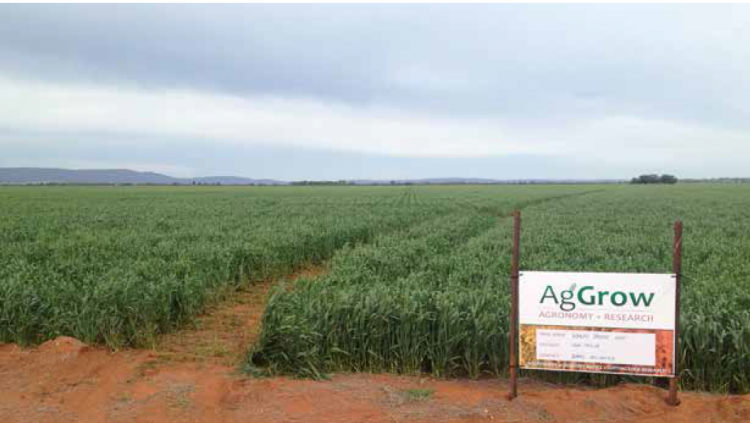
I remember from my days on farm that my dad would often keep his stubble’s for the much needed sheep feed. The fibrous stubble provided a great dietary balance especially when combined with salt blocks.
If you look at some of the recent data it suggests that controlling weeds over a full 18 month fallow has proved to be more economical. With this in mind we started to ponder, how would this strategy compare with a green manure vetch crop. With this concept in mind we put together a trial at Merriwagga that commenced in 2012.
The trials aim was to compare the yield benefit and economics of the different management options and green manure treatments.
The treatments included comparing various fallow spray timings with a vetch cover crop and a cover crop of oats (both were sprayed out in September).
The trial was set up to compare the yield benefits and the economics of various management options during an 18 month fallow and green manure treatments. The treatments included various spray timings verse a green manure vetch and a cover crop of oats. The trial consisted of 5 treatments.
Figure 1 gives you a rough overlay of how the trial in Merriwagga was set out. The trial was set up on the 7th of March 2012 and the oats and the vetch were sown on the 27th of March.
The above figure shows the average yield in kg/ha of each of the five treatments. By looking at the graph you can see that a fully sprayed fallow gave the highest yields followed by the fully sprayed fallow and vetch treatment. When we look at the costs the spray fallow commencing in June and the one commencing in July had the least costs although they had lower yields and grain protein when compared to the full spray fallow.
Summary
The highest gross margins were achieved when the 18 month fallows were sprayed the entire way through. It should be noted that in a wet season like 2012, vetch can be a valuable tool to add value to long fallows whilst maintaining yield potential and grain quality. An example of the added value would be the grazing opportunity for vetch pastures although it wasn’t accounted for in this trial.
This project was made possible through a collaboration with Ag Grow agronomy. You can check out Barry’s site by following the link provided. If you would like to see the full article I have provided a link below. Also to keep up to date feel free to check us out on twitter and facebook.
Good Stubble or Bad Stubble Loads
Background
Stubble retained systems has began to become common practice throughout the central western area. This has lead to the focus of current research being directed towards maintaining the profitability and environmental sustainability of retained stubble systems. The major agronomic drivers for the adoption of stubble retained farming systems has been minimising the risk of soil erosion as well as maintaining the in season benefits of soil moisture retention.
Take Home Messages
The CWFS and CSIRO site trials have suggested that stubble loads greater than 3 t/ha can begin to limit yields.
“No till with no stubble is no good” On hard setting red brown soil types. The issue is that the annual incorporation of stubble just prior to sowing by either cultivation or burning removal will result in the loss of the long term benefits of retaining stubble.
“If you don’t measure it you cant measure it” By taking field measurements of your stubble loads you have just taken the first step in managing the impacts of your stubble loads.
The options to manage a stubble load over 3 t/ha should be considered carefully in order to tie in other agronomic benefits of removing the stubble load.
In a GRDC update paper by James Hunt demonstrated that the benefits of stubble retention are achieved at stubble loads between 2-3t/ha. This leads us to believe that cereal stubble above 2-3t/ha past sowing is unlikely to provide any yield benefits and in favorable seasons can reduce yield. The issue is how do you go about managing these high stubble loads without placing your farm at risk of erosion and soil moisture loss.
The above graph shows the relationship between growing season rainfall and the yield difference between stubble retained direct drill treatments. The graph shows that as the growing season rainfall increases the benefits of a 2-3 tonne stubble load diminish and even begin to negatively impact on crop yields.
Managing stubble loads greater than 3t/ha
There are several options when it comes to reducing stubble loads between harvest and sowing. It is important to make the decision based on interactive factors such as the control of weed seeds etc.
At harvest with the header.
Left undisturbed during the fallow, the do nothing option.
Cultivated into the soil during the fallow.
Mechanically managed but retained on the surface during the fallow.
Burnt
Removed e.g. bailed.
Grazed during the fallow.
An important point to make is that stubble management shouldn’t be placed ahead of fallow management for example the control of summer fallow weeds.
In the CWFS district it appears that majority of the benefits of stubble retention are obtained by retaining 3t/ha and any more can risk reducing yields, particularly in favorable seasons. Monitoring your stubble loads is the first step when it comes to making the decision whether to reduce the stubble load. So remember you cant manage what you don’t measure.
The Use of Cover Crops in NSW
In 2009, 95 farmers in the mixed cropping zone of NSW were surveyed in relation to their use of pasture species with perennial pastures being a key focus. The survey found that 52% of the land was under crop, 29% contained perennial pasture and 19 % contained annual pastures.
Stemming on from the survey was a series of large scale experiments, three at Ariah Park and one at Brocklesby in southern NSW in 2009. Two further experiments were also conducted in 2010 to compare the effects of cereal crop sowing rates on the establishment of perennial lucerne, phalaris, cocksfoot and chicory. The persistence and productivity of these species was monitored for two years after sowing.
Comparing the dry and wet years
It is a typical rule of thumb that when cover cropping farmers reduce the sowing rates of the cereals, which was the case at Ariah Park. Although this wasnt the case in the higher rainfall area’s at Brocklesby where the barley rates didn’t differ when sowing a cover crop. As expected the drier years resulted in a lower survival rate of the pasture as well as a significantly lower level of dry matter production when compared to the stand-alone pastures. Even during spring for the wetter years there was still a clear difference between the cover crop perennial pasture and the stand-alone perennial pasture.
Perennial pastures
Looking at the survey it was decided that it was important to distinguish between the proportion of farms that have a particular species present. This allows us to determine the popular pasture species in southern NSW.
Lucerne: Lucerne was the most common pasture species grown in the eastern (86%) and western parts (82%) of southern NSW.
Phalaris: After lucerne the next most common pasture species was phalaris, on average 48% of farmers reported growing phalaris.
Native Grasses: The bronze medal goes to native grasses with 35% of the farmers in the eastern zone and 29% in the west growing native grasses. The land that was devoted to growing native pastures is often assumed to be unimproved or naturalised as sowing Australian native pastures may be problematic.
Chicory: Chicory was sown on 36% of the farms in the eastern zone, but only 18% of farms in the west were growing chicory due to its lower levels of persistence in the lower rainfall regions.
Establishing perennial pastures
The majority of farmers reported using cover crops at some point or another to establish pastures. In the Western areas of NSW 69% of farmers mostly or always used cover crops . The main advantages of using cover cropping that the sale of the grain covercrop offset the cost of establishing the pasture. Some farmers also noted that the crop stubble also protected the young pasture seedlings in the year of pasture establishment.
It was noted by NSW farmers that cover cropping in years of low rainfall often resulted in poor pasture establishment.
Cover cropping in the dry year of 2009: The total annual rainfall for the year of 2009 at Ariah park and Brocklesby was more than 100mm below the long term average.
How did the cereal crop go: The cereal plant populations were heavily influenced by the sowing rate of the cover crop. With the higher pasture sowing rates resulting in less crop plants per square meter. Although there was no difference in crop above ground dry matter or yield between the different sowing rates.
How did the pasture go: All pastures species were successfully established in May to June 2009, with no significant difference in plant populations regardless of whether they were sown with or without a cover crop present. Although for species common to more than one location the populations varied considerably across sites. The impact of the dry spring seemed to be the primary factor that thinned out the pastures grown under a cover crop, in some cases a density of 43 plants per square meter was reduced to a mere 3-4 plants per square metre by the dry spring.
Second year pasture growth: During the second year of pasture growth it was found that the major issue was the weed populations. During the first year choices are quite limited when it comes to chemicals for weed control and there is a much thinner pasture stand that is failing to out-compete the weeds. The density of cocksfoot and phalaris in the second year as also negatively effected by sowing into a dry year.
Cover cropping with annual legumes: Annual legumes were also measured during the experiment although they failed to survive long enough under the dry conditions of 2009 (Ariah Park) for any data to be collected. When data was collected from the other sites it was shown that the cereal crops significantly decreased the level of dry matter production by the annual legumes. In relation to the annual legume seed set there was less than half the seeds produced in order to maintain a robust pasture into the up and coming year.
Conclusion: Even though there is a financial benefit to being able to strip a cash crop in that year the financial benefit is offset in varying degrees by poor pasture establishment even in areas of higher than average rainfall. Another downfall is the potential for increased weed incursions into the pasture as a result of poor plant densities.
Crop Rotations (2014)
The Merriwagga tillage and rotational trial was established in the year of 1999. The trial aimed to compare no till farming techniques against conventional farming methods over, wait for it a whopping five different crop rotations. The trial is currently managed by Agrow agronomy in a partnership with central west farming systems. In the past the trial site has been a valuable tool for practical agronomic demonstrations.
Key Points
No till treatments have been higher yielding and more profitable in continuous cropping rotations. Cultivation has increased yield and profit in 18 month fallow rotations.
Two cereals followed by a break crop of either field peas or canola no till has been the most profitable rotation. Interestingly 16 years of continuous wheat has not been to far behind.
Weed spectrum and numbers have changed dramatically within rotations and tillage methods. Interestingly no till treatments have hosted less weeds than cultivated treatments.
One year of no pre emergent herbicide has taken the trial back 6 years and has allowed a large number of ryegrass plants to germinate and set seed.
Trial Design
You can locate this trial approximately 10 km west of Merriwagga in NSW. The soils are a red sandy loam with an underlying calcareous subsoil. The pH ranges from 5.5-6.5 and have a tendency to erode with wind and water.Each plot is a massive 1 hectare in size, and each treatment is replicated three times.
Tillage Treatments
No Till:
All weeds controlled by herbicides
Sown with an NDF single disk seeder
Stubble always retained
Conventional:
The weeds were controlled with a combination of herbicides and cultivation.
Sown with an NDF single disk seeder.
Stubble was incorporated
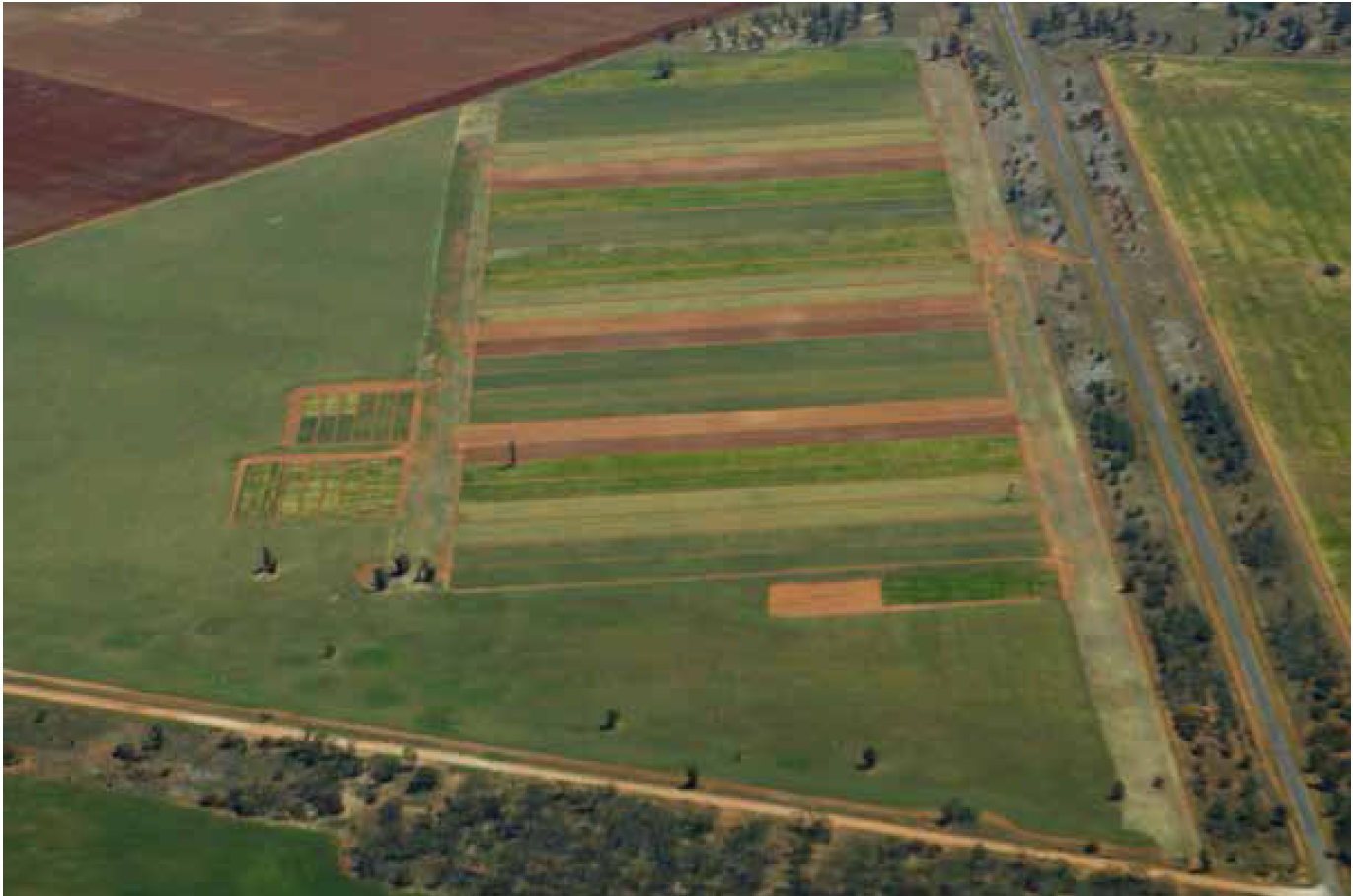
Results and Discussion
Economic Comparisons: Over the 15 years some clear trends have began to rise to the surface. It should be noted that the costs are at a contractors rate to provide a comparison of the real costs associated with each farming system.
No till farming methods have either maintained or increased yield under continuous cropping rotations. Although this wasn’t the case when a fallow was included in the rotation, in this case cultivation tended to increase yields.
When looking at growing crops in no till systems the no till farming techniques have been on average 15% cheaper than when cultivation us used.
The most profitable rotation has appeared to be two cereals following a break crop of either peas or canola under no till systems.Even though the continuous wheat appeared to be close behind there is a greater agronomic risk involved when accounting for weed, moisture and disease pressures.
Nutrition: The nutritional variation between no till and cultivation treatments weren’t statistically different. However we did see a consistent difference between the different rotations. Overall the rotations with fallows or peas proved to have significantly higher levels of soil nitrogen.
Another interesting point to make was the steady increase of Colwell phosphorous. This is may be due to the fact that during the drought years we were adding more to the system than we were removing.
Weeds: Overall the no till rotations have hosted less weeds than the cultivated rotations. This is thought to be as a result of better herbicide efficacy in no till systems with pre-emergent herbicides and also the increased weed persistence through seed burial in cultivated systems. As expected the rotations with fallow periods tended to be the cleanest. The rotations with field peas often hosted higher levels of fumitory. The continuous wheat rotations were at the stage where ryegrass had began to out compete the crop by 2007. Pre emergeant herbicide strategies have now reduced ryegrass levels to a level where they are not so different from the other rotations.
If you would like to see the full paper feel free to follow the link below. If you have any questions feel free to give us a call or even follow us on facebook or twitter fore a more in depth discussion.
Impact of Windrow Burning on Mice Populations
Windrow burning is commonly used for the control of weeds in retained stubble systems. By removing the spinners from the rear of the header the stubble, trash and weed seeds are directed into a narrow windrow. From here the farmer can elect to burn the stubble thus destroying the weed seeds in the process. The windrows are usually burnt in late summer or early autumn when the fire bans have been lifted.
Unfortunately the stubble windrows can contain spilled grain which provides an excellent food source for mouse populations. The stubble windrow also provides a great deal of shelter for mouse population during cool conditions. By keeping these factors in mind CWFS has conducted observations in the Wyalong area. These observations were conducted at four key seasonal times. The research is a component of the GRDC stubble project as well as the surveillance and forecast for mouse outbreaks in Australian cropping systems project.
The increase in the amount of windrows being burnt in the area is theorized by CWFS to impact on mouse populations in two ways.
A possible increase in mouse populations due to a concentrated food source as well as the windrows providing shelter for the animals.
A possible decrease in mouse populations by concentrating the mice into a narrow windrow and incinerating them in combination with a reduction of time in which spilled grain and stubble is available for the mice.
From data collected over the four observational periods there were no conclusive results to suggest that the mouse populations were impacted by the windrows. It is suggested that the availability of water or moisture was the limiting factor which prevented mice from initially entering and colonizing either of the control sites. However if there were significant rain events that fully saturated the windrows there would have been significant moisture for mouse colonization.
The cards recorded a high level of activity after rainfall events within the control plots. It appears that windrow burning and sowing activities had a negative impact on mouse populations by the loss of habitat and the concentration of their food source.
In conclusion when it comes to reducing mouse populations ability to persist, the burning of windrows should take place as soon as possible. after the lifting of fire bans. Concentrating their food source into a specific location may also assist in a targeted approach to mouse control.
NSW DPI Stubble Grazing efficiency
Stubble efficiency – Stubble Grazing
Condobolin 2015
Key points
Treatment 1, Nil grazed, moderate stubble yielded the highest, (2.18 t/ha).
No significant difference in Total Plant Available Water, the majority of stored water was below the 50 cm depth.
There was a significant difference between the eight treatments when comparing available soil nitrogen.
There was a significant difference in grain quality attributes between the eight stubble treatments.
Maximising Spray Results in Stubbles
Nozzle Setup: Aiming to get a double overlap occurring with your spray nozzle output.
Should be set up at a 50 cm spacing with a 10 degree fan angle
When stubble is introduced into the system the stubble provides a false floor. This leads to the spray jet overlap occurring within the stubbles canopy. This minimises the degree of contact the chemical has with the weeds. In order for the spray overlap to occur prior to hitting the stubble the height of the stubble must be accounted for when setting your boom height.
Spray Direction: When spraying headlands make sure that you try and travel in the same direction as the stubble. If you spray across the stubble more of the chemical may end up stuck to the stubble instead of penetrating the stubbles canopy and making contact with the weeds below.
There are a range of methods that you can apply in order to increase stubble canopy penetration. The first being to increase the droplets size, by having a larger droplet the droplets trajectory is much steeper than the lighter droplets. Within the inter row all droplet sizes have been seen to penetrate although for the weeds that grow within the row a much larger droplet size is needed in order to obtain significant enough herbicide contact.
Pre-emergent: For pre-emergents most growers are using air induction nozzles in order to minimise the velocity of the droplet being released. The air that is inducted within the droplet acts as a cushion during contact that minimises the chance that the droplet will splatter and miss the target. The larger droplets that aren’t air inducted have a much higher velocity and are prone to splashing off the target upon impact.
Water Volume: Where there is very little stubble rates 40-50 litres of water may be used although in a heavy stubble paddock the rate will need to be increased to 60-70 litres of water in order to achieve the same result.
Speed: By slowing down while spraying you have a higher chance of getting the droplet on a more vertical trajectory to the target species. Under a heavy stubble load it is ideal to reduce your speed to 16-18 km per hour.
Weed stresses: In conditions where there is a very dry sub soil with summer storms over the top weed stressing may occur. The weeds use the available moisture to get a good germination and then begin to stress quickly as they use up the moisture within the profile. The key here is to get on top of the weeds as soon as possible before they become too stressed. For summer spraying make sure that you’re using that larger droplet size in order to maximise in longevity on the surface of the weed. Summer grass weeds will tend to stress before broad leaf weeds do.
The Risk of Summer Inversions
The most effective strategy for conserving moisture during the summer fallow period is by effectively controlling summer weeds. Although there may be some key issues that you will encounter when applying chemicals during this period.
Surface Temperature Inversions
In cool night conditions airborne chemicals concentrate near the surface and winds can move the droplets away from the target.
During the day the soil temperature gradually increases, which allows the air that’s in contact with the soil to be warmed as well. This process caused a surface temperature inversion to be established. This layer is capable of acting like a barrier which makes spraying conditions unsafe as there is a high risk of spray drift.
During the night ground loses heat and the low level air cools as shown in the image above. This results in the air temperatures increasing with height and the temperature profile becomes inverted. When this process occurs close to the ground its called a surface temperature inversion. If you take another look at the image above you will see where the surface temperature has impacted upon the air temperature and where they meet is labelled as the inversion layer.
What can cause them?
There are a variety of different causes for temperature inversion layers.
These causes include:
1# Radiation Inversions: Radiation inversions are capable of forming at anytime during the night when the wind speed is less than 11km/h and cloud cover isnt severely restricting surface cooling. When the sun sets the heat radiates back into space, causing the ground to cool, the air in contact with the ground becomes cooler than the air higher up in the atmosphere. This is called a surface temperature inversion. Radiation inversions are the most dangerous when it comes to spray drift.
2# Advection Inversions: Advection inversions are caused when cooler air moves into an area and slides under layers of less dense warm air. This tends to happen when a cold front moves into an area or a sea breeze pushes cool air inland. It may also happen when cool air moves down a slope and slides underneath layers of warm air. This process intensifies the effects of radiation inversions.
3# Vegetation Inversions: Vegetation and crops have the ability to shade the ground under neath them. The air that comes in contact with the ground will stay cooler the adjacent areas where there is less ground cover. This often occurs just after sunrise. It is possible that the air moving above the vegetation of the crop may be significantly warmer than the air moving within the crop. This can allow airborne droplets to move over the vegetation instead of penetrating into it.
4# Transpiration: Transpiration from a dense crop canopy on a hot day can form a cool layer of air just above the crop. Later in the day this layer of cool air can act like an inversion over the crop, making the penetration of small spray droplets quite difficult.
How do I spot surface inversion?
Visual Clues
A surface temperature inversion is likely to be present if:
A mist, fog or dew has recently occurred
Smoke or dust hangs in the air and moves sideways just above the surface
Cumulus clouds that have built up during the day collapse towards the evening
Other Clues
Wind speed is constantly less than 11km/h in the evening and overnight.
Cool off slope breezes develop during the evening or overnight
Distant sounds become clearer and easier to hear
Aromas become more distinct curing the evening than during the day.
There are a variety of things that you can do to minimise spray drift. Make sure that you read the product labels and that your aware of sensitive areas in a paddock. It will also be beneficial to use larger droplet sizes in combination with an adjuvent that does not increase the amount of drift able fines produced by the nozzle.
If you have any further questions on spray drift make sure that you leave a comment below or you can contact us on facebook and twitter. For some additional information feel free to check out my GRDC reference source by clicking the link below.
Controlling Weeds in Wheel Tracks
Poor weed control within the wheel tracks of the sprayer can be caused by a number of factors.
#1 Physical Stress: The physical damage caused to the weed by the wheel pressing down upon it may lead to poorer uptake and translocation of some products.
#2 Poor Deposition: When air is displaced from the sprayer moving forward its possible that the droplets can be displaced as well. This effect will become more visible as the speed of the sprayer increases, tires are wider and with more aggressive lug patterns.
#3 Increased dust levels: The high levels of dust that is produced by the wheels can interact with many products on the leafs surface. Products that are known to be influenced by dust include Glyphosate and Paraquat.
When assessing whether one of these factors has occurred its important to account for the secondary germination of weeds. As the compaction of the tires may have led to soil seed contact which resulted in germination. A simple method of avoiding this is to record the growth stage of the weed identified.
#Spray timing and drift potential
The operators that tend to have issues with dust avoid the issue by spraying on calm days and after a summer rainfall event. Another option would be to spray during times of low wind speed and just after an early morning dew. One thing to keep in mind though when spraying early in the morning is the high chance of a surface inversion.
#Adopt control traffic
By adopting a control traffic system it is possible to minimise the dust the amount of dust occurring as a result of the wheel tracks. The wheel tracks under controlled traffic system tend to be more compact in the top soil, which explains the lower dust levels.
#Other options
The key is to minimising the amount of air that is displaced by the tires. Some farmers have been using mud flaps and mud guards that are capable of limiting the degree of air movement from the tires to the base of the boom. Wheel track nozzles are another great idea where an applicator will place much larger nozzles directly behind the wheels in order to ensure the same level of coverage. Other options that may be worth considering would be a higher clearance sprayer, wider wheel spacing’s and front mounted booms.
Conclusion
When looking to improve the level of spray coverage within the wheel tracks a grower will need to consider a number of factors. The best thing that growers can do is to utilize additional wheel track nozzles when using knockdown herbicides. If you would like some additional information feel free to check out my reference source for this article by following the link below.
Applying Pre-Emergents in Stubble
There are a range of benefits when it comes to using pre-emergent herbicides within your integrated weed management strategy for the year.
The core benefits of pre emergent herbicides includes:
1# Pre-emergent’s offer an alternative mode of action
2# Reduces the selection pressure on post emergent herbicides
3# Eliminates the early season weed burden
4# Cost savings in the fallow where multiple knock downs may be needed
5# Requires a cultivation which encourages weed germination within the herbicide zone
6# Provides an opportunity in crops with few post emergent options
The article will aim to give farmers an indication of how pre-emergent herbicides act upon the plant, breakdown in the soil and how they interact with stubble’s in stubble retained systems.
When herbicides are applied pre-emergent its important to account of the environmental impacts upon the herbicide and how they impact its interaction with the target weed species. An example of this would be relatively insoluble herbicides that bind tightly to soil colloids. Even though these herbicides are unlikely to leach environmental conditions may provide the optimal opportunity for leaching to occur. If the soil is relatively dry and a large rainfall event occurs it is possible that the highly insoluble herbicide will move further down into the soil profile. This means that the herbicide will no longer remain in the zone where it is effective for weed control.
Interactions with stubble
Stubble’s in a minimum till system are capable of intercepting the pre-emergent herbicide that’s applied before it reaches the soil. It is found that the amount of herbicide that is intercepted is proportionate to the percentage of ground cover.
The negative effects of the herbicide being caught within the stubble canopy are two fold.
Some products require incorporation or soil contact in order to activate. This leads to ineffective weed control later on.
Interception may also lead to an uneven coverage of the soil surface, which results in insufficient herbicide being available for effective control of the weed population.
When the herbicide comes into contact with standing organic material the herbicide is subject to a degree of binding which is dependent on the herbicide and its characteristics. In some cases herbicides are tightly bound and as a result are lost to the system in relation to weed control even though a subsequent rainfall event may occur. Other herbicides are only loosely bound and can be returned into the system and still impact upon the weed population. Even though some herbicides are able to be washed back into the system from the stubble, the herbicide may be subject to volatility and photo degradation.
What can I do?
Under conditions of high stubble loads the degree of spray droplet interception can be minimised by simply adjusting how the herbicide is applied.
Some techniques that can maximise the levels of herbicide reaching the soil include:
Wind across the rows during application
Use rear facing nozzles where the angle is able to offset the travel speed. The aim is to have the droplets moving predominately downwards through the stubble
Select a nozzles that produces larger droplets and that are optimally air inducted with narrow fan angles
Keep your water rates high
Narrow nozzle spacing
Slower travel speeds
Minimise the boom height but ensure at least a double overlap
For more information on sprayer setup for retained stubble systems make sure that you follow the link below.
Pre-emergent herbicides and windrow burning
With herbicide resistance levels on the rise growers have introduced windrow burning as a tool within their integrated weed management strategy. Windrow burning concentrates the previous years stubble and weed seeds into a narrow band that can be burnt.
If pre-emergent herbicides are used in conjunction with this technique then it may be worth considering the following points.
If the pre-emergent herbicide is applied over the top of the windrow before its burnt will result in little herbicide coming into contact with the soil.
Ensure that a hot burn is achieved in order to effectively control the weeds within the windrow. A hot burn will also minimise the degree of charcoal left over for herbicides to potentially bind to .
Herbicide is capable of binding tightly to ash as well as charcoal so where there are high levels of ash it may be worth waiting for a rainfall event to occur. The rainfall event will disperse the ash thus maximising herbicide soil contact.
Photodegredation
The process of photodegredation occurs when the herbicide undergoes a chemical reaction in the presence of sunlight. This reaction breaks down the herbicide and the herbicide is lost to the weed control system. Under Australian conditions incorporation or rainfall events are usually sufficient for taking the herbicide into the soil profile. However if a herbicide is sprayed onto a dry soil or stubble during the summer period and there isn’t a follow up rainfall event or cultivation herbicides losses from the system may be the result.
Volatilisation
A large portion of the pre-emergent herbicides that are used in Australia are considered to be volatile. These herbicides transition into a gaseous phase after application if the herbicide isnt incorporated. If the herbicide label says that it needs to be incorporated within 24 hours it doesnt mean that volatilisation wont occur until the 24 hour point. Volatalisation starts occuring immediately after application if left on the soil surface. With this in mind its important to incorporate the herbicide as soon as possible in order to maximnise the effects.
Incorporation
Incorporation is an essential component as volatilisation and photodegredation are capable of breaking down a herbicide to a point where its rendered innefective. The process of incorporation can happen in one of four ways.
1# Full cut mechanical incorporation
before the adoption of minimum till systems full cut incorporation was considered to be common practice. This process is usually done by a harrows or an offset disk. This is the best method for successfully incorporating highly volatile products.
2# Incorporation by sowing
This method is quite popular within minimum till systems as there is minimal disturbance. The seeder is setup so that it throws a small amount of treated soil out of the sowing furrow and into the inter-row to successfully cover the herbicide. This process will only work on 25-30cm row spacing’s. When setting up the seeder make sure that there is adequate soil throw into the inter row to maintain herbicide coverage.
3# Irrigation
Irrigation is an effective method of incorporating pre-emergent herbicides into the soil assuming there is adequate water in relation to the soil type for infiltration to occur.
4# Rainfall
Rainfall is a popular method for incorporation during the fallow period. If adequate rainfall doesn’t occur after application alternative methods of incorporation may need to be applied in order to minimise the degree of herbicide breakdown.
Keep in mind with these incorporation methods that the main aim is to minimise the amount of exposure that the pre-emergent herbicide has to the sun.
Conclusion
When your looking to apply a pre-emergent herbicide there is a few things to keep in mind.
How volatile is the herbicide and is it susceptible to photo degradation?
How soluble is the herbicide?
How tightly will the herbicide bind to stubble and organic matter?
How will I incorporate the herbicide and what is my backup plan if the first method fails?
If you would like some additional information feel free to down load my reference from the link below. If you have any questions make sure that you leave them in the comments section or send us a message on facebook and twitter.
Slowing Crown Rot Build Up by Inter Row Sowing
Research that was conducted in NSW and Queensland has indicated that inter row sowing has proven to be a useful tool when reducing the build up of crown rot innoculum within control traffic systems. In minimum till cropping system the fungus Fusarium pseudograminearum (crown rot) has become concentrated within the rows of the previous years winter cereal crop.
Dr Steven Simpfendorfer from the Department of Primary Industries investigated paddocks that were sown to wheat, barley and durum across the northern parts of NSW. The aim was to asses the ability of precision row placement as a strategy to reduce the occurrence and the severity of the crown rot and common root rot within winter cereal crops.
Fast Facts
#Fact 1 Inter row sowing benefits:
Inter-row sowing proved to be an effective method of reducing the incidence and severity of crown rot in cereal crops. The results show that by sowing between the previous cereal rows it is possible to reduce the incidence of the disease in crop.
Dr Simpfendorfer says that the fungus has a higher chance of moving into the inter-row if there was a high incidence of crown rot in last years stubble. The movement is suspected to be via stubble fragmentation. This may lead to the effectiveness of this strategy diminishing over time so farmers will need to employ a variety of tools when it comes to controlling crown rot in their retained stubble systems.
#Fact 2: Using break crops:
Burning your stubbles will not be effective when it comes to the control of crown rot in retained stubble systems as the disease lives within the crown of the plant. A combination of burning and cultivation is capable of marginally reducing crown rot levels although it may not be economically feasible as it leaves the soil exposed.
The best option for growers is to use a crop sequence that utilises break crops such as field peas, chickpeas and canola. A combination of broad leaf and narrow leaf crops allows for effective weed control as well as providing that much needed disease break.
#Fact 3: Keep up to date on twitter
Twitter is an amazing tool when it comes to keeping up to date on various topics within an industry, its just a matter of who you follow and knowing where to go. I have found that the best way to follow crown rot in any given year is to put #crownrot into your search bar on twitter. This will take you to a page that archives the latest tweets that are related to the disease. From here you can keep up to date with the latest crown rot studies and even whether farmers are starting to see crown rot in a given area.
#Fact 4: Inter row sowing podcast with Geoff Chase
Earlier this year Central West Farming Systems conducted an interview with a local farmer on how inter row sowing has suited his system. Geoff utilises a variety of break crops in his farming system, which comes with a variety of benefits including disease control that Steven Simpfendorfer alluded to. You can listen to the podcast with Geoff by clicking the link below.
#Fact 5: GRDC crown rot and inter row sowing
The GRDC covered the interactions between crown rot and inter row sowing during the crop updates for 2015. This particular update was filmed in Perth and provides a great overview when it comes to managing crown rot within inter row sowing systems.
Inter-row Sowing
The question here is whether to sow on the row or within the inter-row. Sowing on the previous years row instead of the previous years inter row has been shown to enhance soil water content although it may leave you open to disease threats such as crown rot. This article will look to weigh up the benefits of both systems.
#1 Phosphorous accumulation
Due to a series of poor years there has been an accumulation of phosphorous within soil profiles. In addition, the use of knife points, disc seeders and wider row spacings has resulted in changes in the spacial distribution of phosphorous with specific reference to concentration within the inter-row. The changes in the spacial distribution could either positively or negatively impact on crop performance, depending on the crop in question. In conditions where a fertiliser tolerant crop is sown closer to the starter fertiliser band the crop may benefit from the ease of uptake. Although if you have a relatively sensitive crop such as canola the close proximity of the start-up fertiliser may depress early growth of the crop.
Establishment
There is a relationship between the responses of cereals and broadleafs to row spacings and the interaction with plant populations. As row spacing and seeding rate increases the distance between seeds declines. This can impact on the final germination percentage for the crop. The trial data below from Temora and Condobolin indicates that as seeds were sown closer together the establishment percentage significantly declined.
Relationship between P and row spacings
Figure 2 outlines the effects of row spacings and fertiliser concentration. For a rate of 50kg/ha of MAP increasing the row spacings from 200 to 500 mm, there is an increase from 40-100 granules of MAP per metre row.
A trial was conducted at Condobolin under three separate row spacings (170, 300 and 430mm). At the 170 and 430 mm spacings, yield increased with phosphorous up to 8kg P/ha and then leveled off whereas at 300 mm, yield decreased at phosphorous levels of above 12 kg P/ha.
A row spacing by phosphorous trial was setup in order to look at the difference between sowing on-row and sowing inter-row.
The results concluded that if you are on wide row spacings and you inter row sow next year it will take longer for the plant to reach the available phosphorous although not as long in the second year.
#Off row seeding and moisture
With the adoption of autosteer technologies growers are now able to accurately place the seed wherever they see fit. In Western Australia where non-wetting soils are a major impediment to good crop establishment, minor improvements in soil wetting around the seed can lead to major improvements in crop establishment. Wetting around the seed can be done achieved naturally by the previous year’s standing stubble.
Studies indicate that under no tillage, old and current crop rows provide pathways for water movement within the soil profile. Stubbles leave behind crowns, root channels and bio pores that are all capable of trapping moisture within the stubble zone. These factors are capable of improving the soils wetability.
Conclusion
The research shows that in relation to root penetration and moisture availability it is much better to sow on the row. If a paddock has experienced issues with crown rot in the past then sowing on the row will be placing the seed within the innoculum supplied by lasts years crop.
The Effects of Strategic Stubble Treatments on Nitrogen Response in Wheat
Central West Farming Systems are conducting a nitrogen response trial at a variety of regional sites. The trials are investigating the impacts of different stubble treatments (imposed late in fallow) on nitrogen response, wheat yield and quality. The trials will allow CWFS to evaluate any interaction between pre-sowing stubble treatments and the timing of top dressing. During the year of 2015 these trials were conducted at 4 locations Mumbil Creek, Weethalle, Tottenham and Wirrinya.
The trial is 12 ranges, 3 rows and consists of three replicates. The three primary stubble treatments include standing, burnt and cultivated treatments. This year Suntop was sown at a rate of 35kg/ha and 40kg/ha of MAP was also applied to all treatments to assure that phosphorous wasn’t the limiting factor.
At each site the 3 treatments were developed based upon the cooperating farmers yield expectations for the site. Each treatment represented a different application timing for urea top dressing based on 20kg of N per tonne of expected yield/ha. This rate is a commonly used farmer/adviser benchmark across the region.
The treatments included
All urea applied at sowing.
A 50/50 split upfront and at Z21
Split three ways upfront, Z21 and Z30
Yellow Leaf Spot
Managing yellow leaf spot in stubble retained systems in Central West NSW
Locally specific guidelines and support for a proactive approach to disease management within retained stubble systems.
Key messages:
Stubbles carrying high loads of yellow leaf spot inoculum are the major source of crop infection. Decomposition or removal of stubble reduces inoculum.
Yellow leaf spot is most severe when successive wheat crops with low
genetic yellow leaf spot resistance are grown on retained stubble.Management of yellow leaf spot in CWFS districts should focus on
disease identification and good agronomic practice.Timely urea application may improve crop performance over a fungicide.
Don’t confuse yellow leaf spot with nutrient deficiencies, leaf tipping or frost damage.
2016 Commercial Stubble vs Cereal
2016 Cereal response to stubble treatments in Central Western NSW
Key Points from 2016
Burning or cultivating 2015 stubbles tended to produce higher yields, however this was only significant at Ungarie
High rainfall and a soft finish removed the benefit of stored soil moisture that stubble retained systems may have provided
Nitrogen was the limiting factor for both yield and protein for 2016
Maintaining Profitable Farming Systems with Retained Stubble Across Various Rainfall Environments – Summary of GRDC Stubble Project
Authors: (Compiled by Tony Swan) Tony Swan (CSIRO Agriculture), Paul Breust (SFS), Claire Brown (BCG), Amanda Cook, Blake Gontar (SARDI), James Hunt (CSIRO Agriculture, La Trobe University (current address), Kellie Jones (FarmLink Research), Clive Kirkby (CSIRO Agriculture), Helen McMillan (CWFS), Michael Nash (SARDI), Sarah Noack (Hart Field Site Group), Trent Potter (Yeruga Crop Research), Brad Rheinheimer (CSIRO Agriculture), Cassandra Schefe (Riverine Plains), Naomi Scholz (SARDI), Felicity Turner (MFMG) and John Kirkegaard (CSIRO Agriculture).
Keywords: stubble retention, yield, profitability, management strategies, crop diversity, livestock, N cycling, harvest efficiency.
Take home messages
In 2017, don’t let stubble compromise the big things (weeds, disease, timeliness).
If the intent is to retain stubble:
Pro-actively manage the stubble for your seeding system.
Diversify (add legumes to rotation), deep band N and manage invertebrates. Mice could also be a major problem.
For tined seeders, reduce stubble load by mulching, incorporation + nutrients, baling, grazing and consider sowing at 15-19 degree angle to previous sown row.
If stubbles are too thick to sow through, consider strategic late burn, especially before 2nd wheat crop or if sowing canola into large stubbles.
Early monitoring is essential to see how effective actions are to allow for re-planning.
Background:
Following a GRDC review that identified gaps regarding the impact of stubble retention in southern cropping systems, a five year program was initiated by GRDC in 2014. Ten projects comprising sixteen farming systems groups and research organisations which include BCG, CSIRO, CWFS, EPARF, Farmlink Research, Hart Field Site group, ICC, LEADA, MFMG, MSF, Riverine Plains, SARDI, UNFS, VNTFA, Yeruga Crop Research are currently involved in exploring the issues that impact on the profitability of retaining stubbles across a range of environments in southern Australia with the aim of developing regional guidelines and recommendations that assist growers and advisors to consistently retain stubbles profitably.
In 2016, grain yields have been high across most of southern and south-eastern Australia, with many cereal crops yielding ≥ 5t/ha and often up to 8t/ha which indicates there will be a residual stubble load of 7.5-12 t/ha. This paper examines two main management options to deal with high stubble loads (≥ 5t/ha) in 2017, and incorporates many of the main findings from the stubble initiative to date.
Option 1: How to manage stubble if you plan to retain the stubble at all costs
a. Tine = 1. Harvest high (≥30cm) and mulch or incorporate
2. Harvest low (≤ 20cm), use chopper/power spreader to smash and spread straw evenly across swath at harvest or soon afterwards.
b. Disc = Stripper fronts/harvest high, good diverse rotation
Option 2: How to manage stubble if you have a flexible approach to retaining stubble
Harvest big crops high, graze, burn, bale straw as necessary to reduce stubble to amounts that sowing equipment can manage. Focus on reducing stubble in paddocks where the stubble is likely to
impact the 2017 crop yield e.g. wheat on wheat paddocks.
It has been well documented that to successfully establish a crop into a full stubble retained system requires an integrated management approach incorporating three main stages of stubble
management – pre-harvest, post-harvest/pre-sowing, and finally at sowing (ref 1,2,3,4,5,6). During these periods, a series of questions (some outlined below) will need to be addressed by farmers to successfully establish a crop (ref 4).
What is my preference for tillage system?
What is my seeding system?
What is my row spacing and accuracy of sowing?
What crop will be planted into the paddock in 2017?
What is the type of crop residue?
What is the potential grain yield and estimated amount of crop residue?
Is the crop lodged or standing at harvest?
What is the desired harvest speed and harvest height?
How uniform is the spread of straw from my harvester?
Should I spread residue or place in a narrow windrow?
Do I have a weed problem which requires intensive HWSC, chaff carts or chutes?
Will the stubble be grazed by livestock?
Am I prepared to process stubble further post-harvest: mulch, incorporate, bale?
If incorporating stubble, should I add nutrients to speed up the decomposition process?
What is the risk of stubble-borne disease to the 2017 crop?
Am I likely to encounter a pest problem in 2017: mice, slugs, earwigs, weevils, snails?
What is the erosion risk based upon soil type and topography?
Do I need to burn or what else can I do?
Prior to harvest, all crops should be assessed to estimate grain yield, potential stubble load and weed issues. The GRDC Project YCR00003 is developing an App to assist farmers and consultants. As a rule of thumb, the stubble load following harvest will be approximately 1.5 to 2 times the grain yield for wheat and between 2 to 3 times the grain yield for canola (ref 4, 5, 6).
Remember, there is no perfect stubble management strategy for every year. Crop rotations, weeds, disease, pests, stubble loads, sowing machinery and potential sowing problems will largely dictate how stubble should be managed.
Option 1: How to manage stubble if retaining at all costs
A recent survey was undertaken in the Yorke Peninsula and Mid-North of SA which showed that 82% of farmers use tined seeders, with the remaining 18% using discs (Yeruga Crop Research). The proportion of farmers using either disc or tined seeders would be similar to the YP and mid-north areas, although the percentage using tined seeders would be higher in many areas. In relation to establishing a crop in stubble retained systems, the following issues arose:
About 21% of farmers were totally committed to retaining stubbles at all costs while about 79% would consider burning stubbles if absolutely necessary;
Herbicide efficacy was extremely important (80+% in both tine and disc);
Managing weeds (approx. 65% both tine and disc);
Managing slugs and snails (> 50% in tine and disc);
Efficiency and ease of sowing (82% in tine and 58% in disc);
More important at seeding:
Straw length (70% tine)
Chaff fraction (50% disc)
Hair pinning (15% tine, 84% disc)
Stubble height
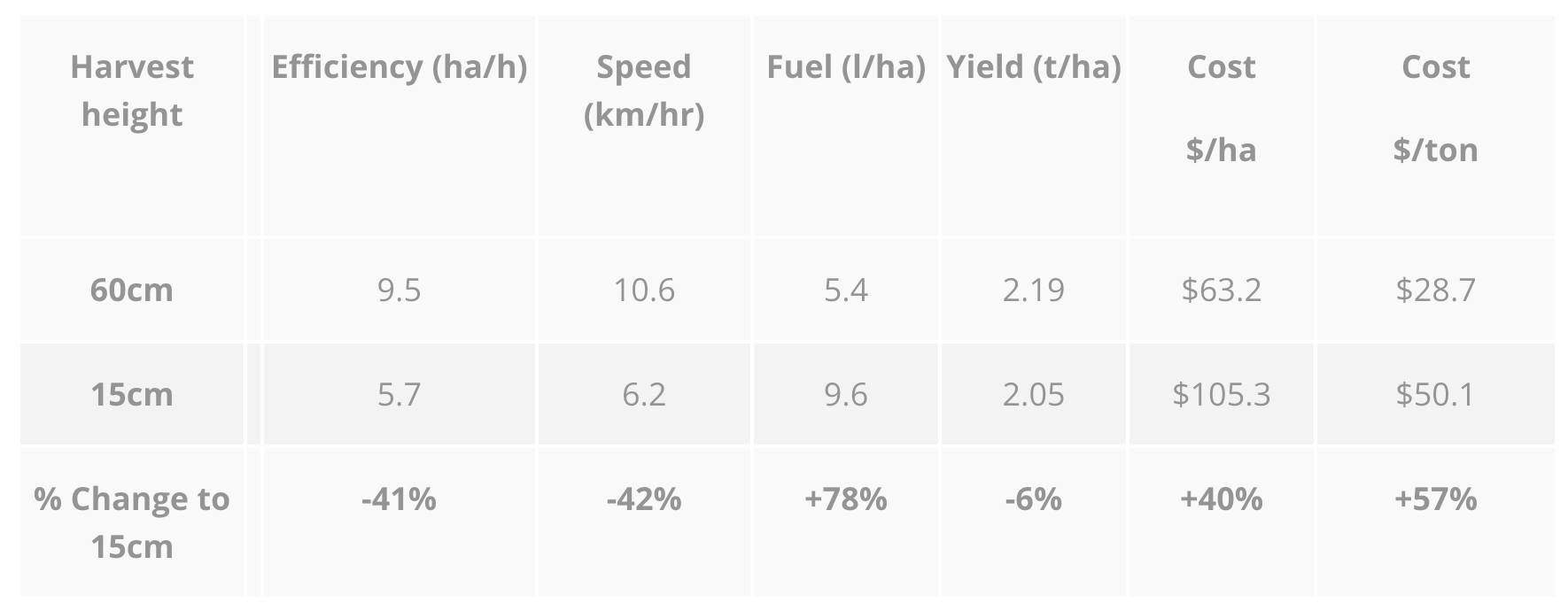
Using a stripper front or harvesting high is the quickest and most efficient method to produce the least amount of residue that needs to be threshed, chopped and spread by the combine. Harvesting high (40-60 cm) compared to 15 cm increased grain yield and combine efficiency by reducing bulk material going through the header and reduced harvests costs by 37 to 40% (Table 1). As a general rule, there is a 10% reduction in harvest speed for each 10cm reduction in harvest height (Tables 1 and 2, ref 4, 5, 8). Slower harvest speed across a farm also exposes more unharvested crop to the risk of weather losses (sprouting, head/pod loss, lodging) during the harvest period, and the cost of this is not accounted for in Table 1.
Table 1: Harvesting wheat low or high using a JD9770 combine in 2014 (Ref 7). Ground speed was
altered to achieve similar level of rotor losses at both harvest heights. Values are means of three
replicates STS yield monitor and all differences are significant (P<0.05). Operating costs
determined at $600/hr.
However, there are some negatives to retaining tall wheat stubble, with several groups in the initiative finding that wheat sown into taller wheat stubble (45cm cf 15cm) received less radiation and were exposed to cooler temperatures. This can reduce early growth and significantly reduce tiller numbers. In a Riverine Plains experiment in 2014, there was a significant reduction in grain yield (4.98t/ha cf 5.66t/ha with lsd @ P<0.05 = 0.45t/ha) in tall compared to short stubble. In 2015 the group found no difference in grain yield. In 2016, significantly less tillers were found in several trials in tall stubble, however in all of these trials, this did not result in any difference in grain yield.
Table 2: Harvesting wheat low or high using a Case 8230 combine with a 13m front in 2015 (ref 7). Ground speed was altered to achieve similar level of rotor losses at both harvest heights. Operating costs determined at $600/hr.
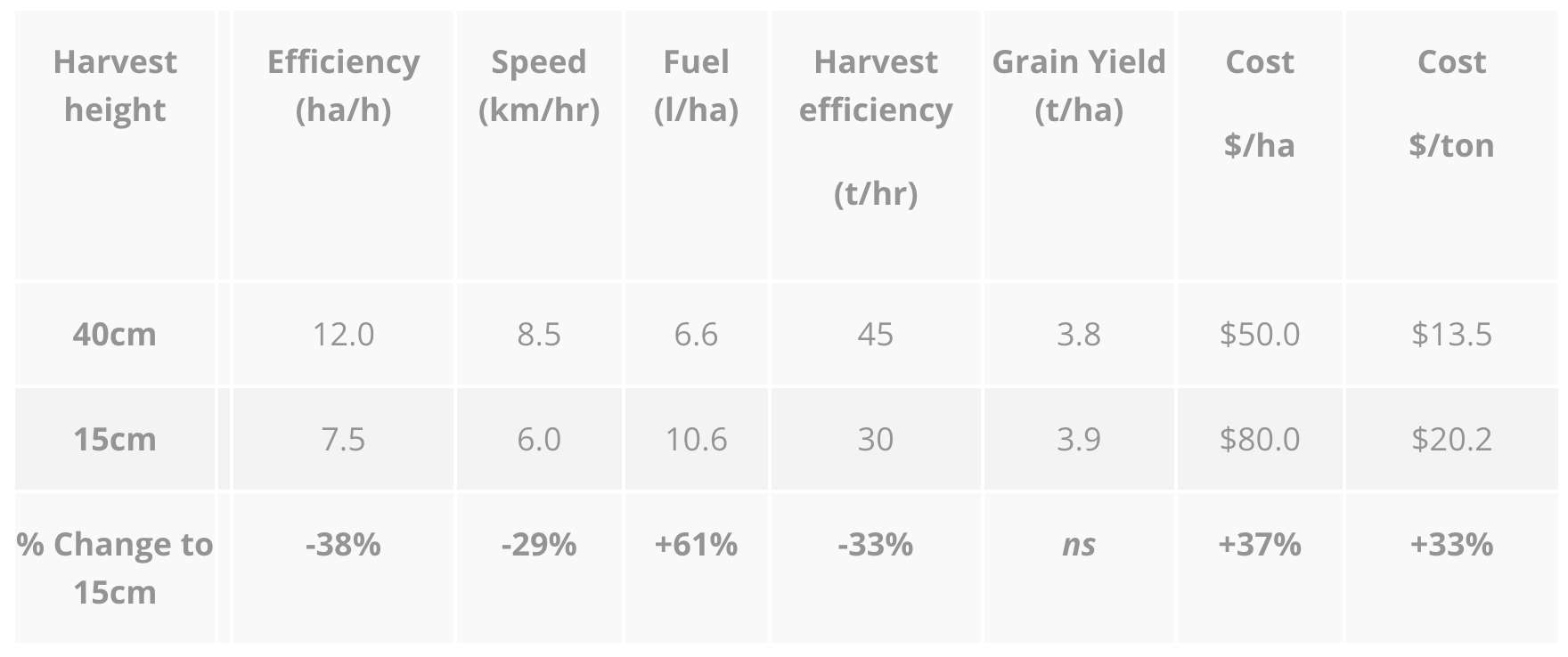
(ns = no significant difference)
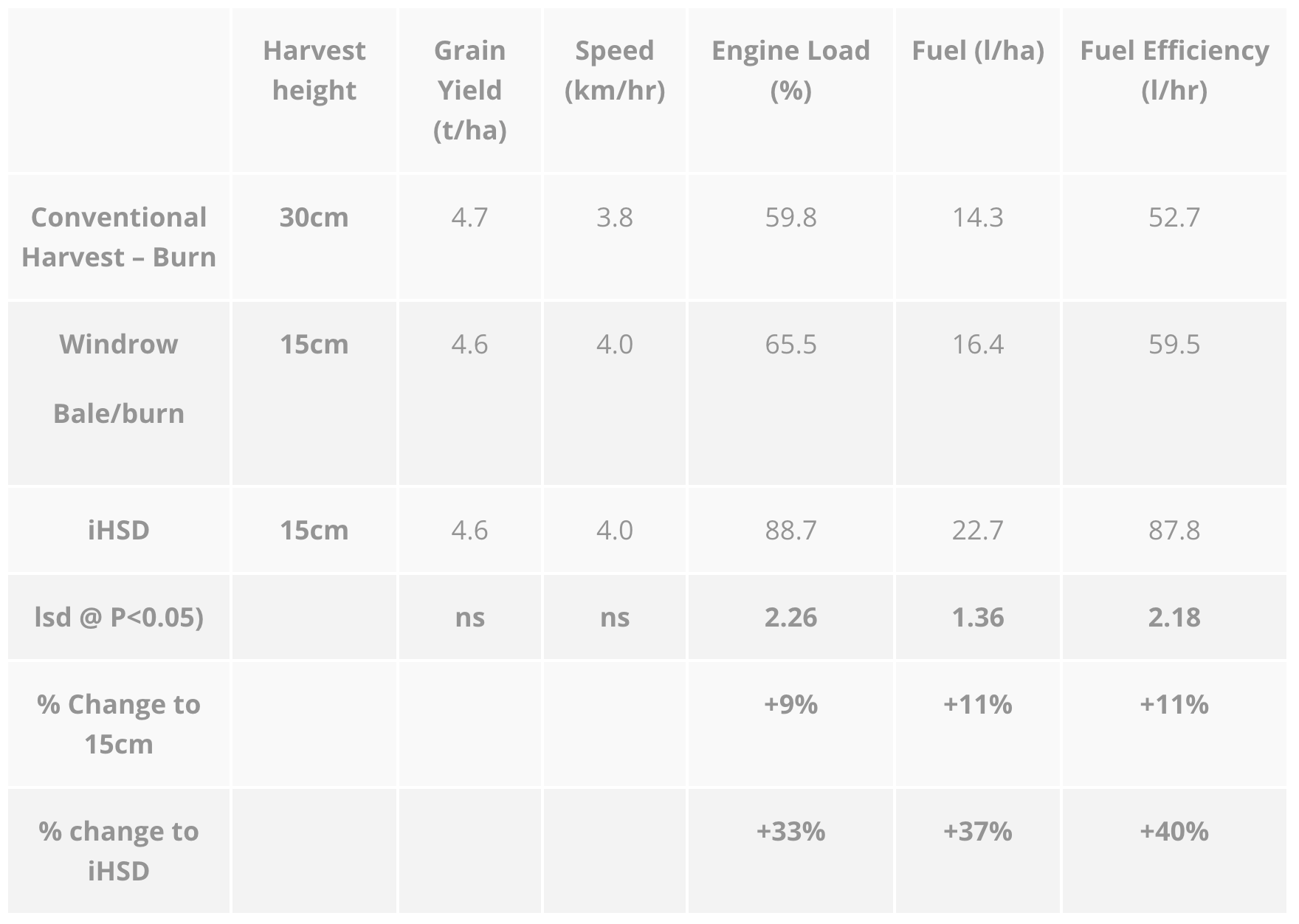
In 2016 like many previous years, herbicide resistant weeds, especially annual rye grass (ARG) continue to be a problem. Harvest weed seed control (HWSC) which includes narrow windrow burning, chaff carts, chaff lining, direct baling, and mechanical weed seed destruction is an essential component of integrated management to keep weed populations at low levels and thus slow the evolution and spread of herbicide resistance. HWSC requires crops to be harvested low in order for weed seeds to be captured in the chaff fraction from the combine, and if practiced provides an additional reason to harvest low. The prototype Integrated Harrington Seed Destructor (iHSD) was tested in Temora, NSW in December 2015, Inverleigh in December 2015 and Furner, SA in January 2016 at a constant speed of 4km/hr to compare the efficiency and cost with non-weed seed destruction methods (Table 3). The three large scale field trials in both states are being monitored for changes in annual ryegrass populations before and after sowing between 2015 and 2018.
Table 3: A Case 9120 harvesting wheat conventionally at 30cm, harvesting at 15cm for baling or narrow windrow burning and harvesting at 15cm with a prototype iHSD at Furner, SA in 2016. (Data supplied by GRDC project SFS00032)
In 2016 there has been less opportunity to harvest cereal crops very high in many areas due to lodged or leaning crops, and variable head heights. Cereal crops such as Compass barley often lodged badly resulting in the need to harvest very low.
MULCH and incorporate
Lightly incorporating the stubble into the surface soil using a disc chain or disc machine (i.e. Speed tiller, Grizzly, Amazone Cattross, Vaderstad Topdown or Lemken Heliodor) soon after harvest while the stubble is higher in nutritional value is another option for farmers wanting to maintain all of their stubble, especially where a tined seeder is the primary sowing implement, or where lime and stubble needs to be incorporated into the soil in a disc-seeding system. On the lighter sandier soils in SA, the recommendation would be to delay incorporation until 3-4 weeks before seeding as these soils are more prone to wind and water erosion. Mulching and incorporation requires soil moisture, warm soil temperature, soil/stubble contact and nutrients to convert a carbon rich feed source into the humus fraction. Early mulching and incorporation allows time for the stubble to decompose and immobilise N well before sowing, reducing the likelihood of reduced N availability.
When trying to decompose a large quantity of stubble in a short period of time (i.e. to convert stubble into humus), it may be beneficial to add some nutrients to the stubble prior to incorporation. To assist in minimising the amount of fertiliser required to add to the stubble, determining the concentration of the nutrients in the stubble is important. As humus is so nutrient rich and the stubble residues are relatively nutrient poor, only a small proportion of the total carbon in the crop residues can be converted into humus. Dr Clive Kirkby has found that a maximum of 30% of the total carbon from stubble residues could be converted to humus, so recommends lowering the humification rate to 20% rather than 30%. In our example (Table 4), the quantity of fertiliser (sulphate of ammonia) that would need to be applied to the 10t/ha residual cereal stubble load where the stubble had a nutrient concentration of 0.7%N, 0.1%P and 0.1%S and the farmer wanted a humification rate of 20% would be 33.1kg/ha of nitrogen and 7kg/ha of sulphur at an estimated cost of $14.90/ha for nutrients only. In contrast, if a farmer was trying to build up their organic carbon concentration in the soil from this stubble residue to the maximum possible amount (30% humification rate), the quantity of nutrients required increases to 45.4kgN/ha, 3.8kgP/ha and 7.6kgS/ha, at a cost of $74.40 for nutrients (Table 5). The nutrients applied are not lost, but should form a source of slow release nutrition to the following crop as humus while avoiding “nutrient tie-up” caused by late incorporation of nutrient poor residues. Thus, later inputs could potentially be reduced if costs were of concern.
In an experiment at Harden, NSW between 2008 and 2011, Dr Kirkby incorporated between 8.7 and 10.6 t/ha of cereal or canola stubble without nutrients or with nutrients at a humification rate of 30%. In May 2009, following the incorporation of 8.7t/ha wheat stubble in February 2009, they measured the quantity of wheat stubble that had broken down and found that only 24% of the stubble remained where nutrients had been added whereas 88% remained where the stubble had been incorporated only (Kirkby et al. 2016). A couple of groups (Riverine Plains, MFMG) have included light incorporation (+/-) nutrients in their treatment mixes. Although no group specifically examined residue breakdown, they found that the cultivated (+ nutrient) treatment often yielded the same or more than cultivated (no added nutrient) treatment (i.e. Wheat grain at Yarrawonga January 2017 in Cultivate +40kgN/ha = 6.7t/ha compared to Cultivate only = 5.9t/ha, lsd = 0.58).
Diverse cropping sequence
A diverse cropping sequence provides many benefits for farmers wanting to retain all their stubble annually. Diversity allows each crop to be sown into a less antagonistic stubble by reducing physical, disease, pest and weed constraints.
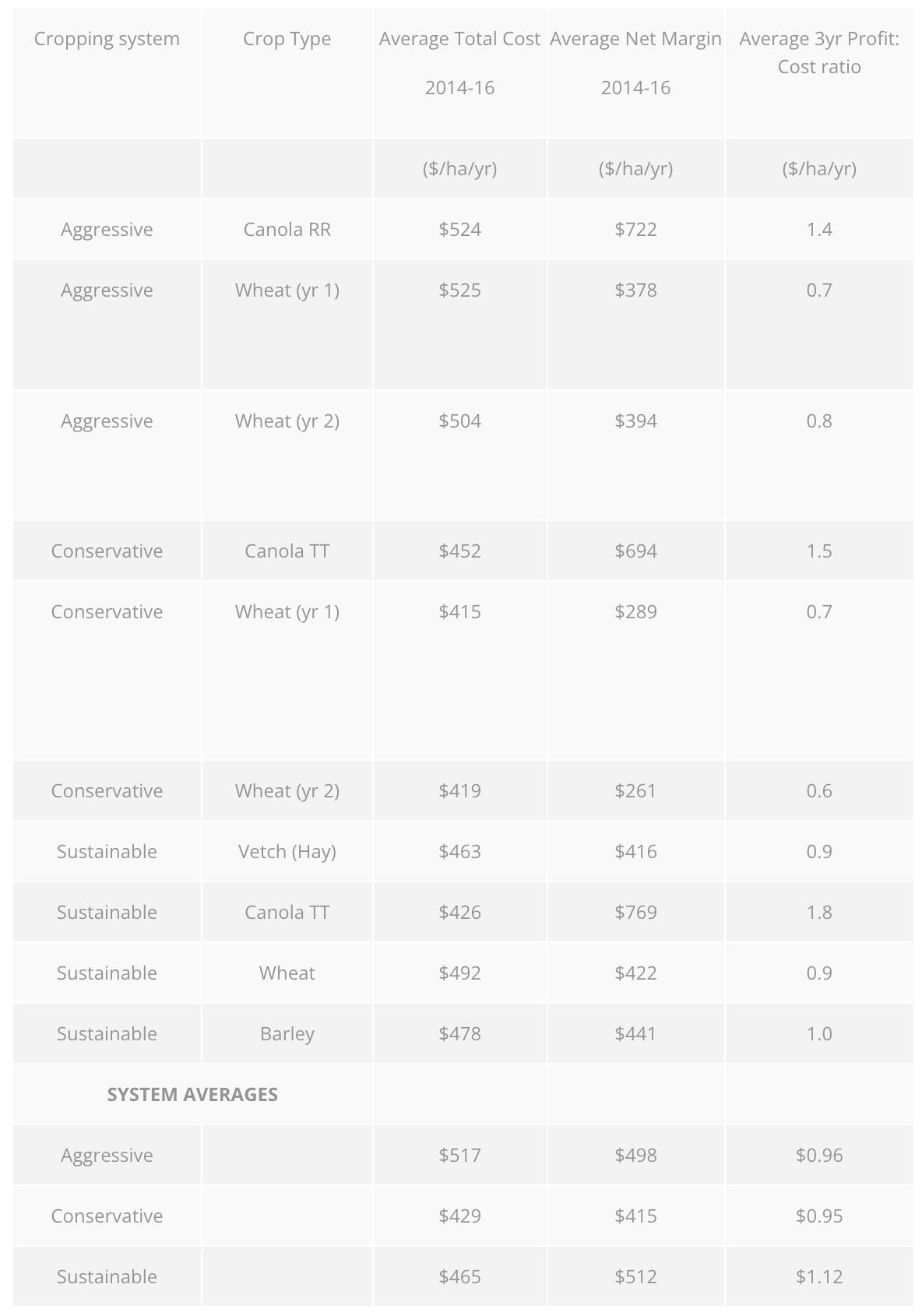
A fully phased systems experiment was established in Temora in 2014 at a site with high levels of Group B resistant ARG to examine if a diverse crop rotation (‘Sustainable’ – vetch hay-TT canola-wheat-barley) could improve the profitability of stubble retained no-till (Flexi-Coil tine seeder with Stiletto knife points and deep banding & splitting boots) and zero-till (Excel single-disc seeder with Arricks’ wheel) systems. Three cropping systems (Aggressive, Conservative and Sustainable) were compared with the rotations for each as Aggressive (RR canola-wheat-wheat), Conservative (TT canola-wheat-wheat) and sustainable (as above). In the cereal crops in the Aggressive and Sustainable system, new-generation pre-emergent herbicides (Sakura® and Boxer Gold®) were used for grass weed control. In the Conservative system, trifluralin and diuron were used for grass weed control in the tine system, and diuron alone in the disc system.
The introduction of diversity in the Sustainable system has allowed it to achieve a net margin ($512/ha/year) which is higher than in the Aggressive systems ($498/ha/year) and at lower cost ($465 cf $517/ha/year) and thus higher profit:cost ratio ($1.12 cf $0.98) (Table 6). The reduced costs in the Sustainable system are driven by lower fertiliser N inputs from the inclusion of vetch hay, which requires no fertiliser N itself and provides residual N for subsequent crops. The barley phase of the Sustainable system has also been more profitable than the second wheat crop in either the Aggressive or Conservative system (Table 6), despite record low barley prices in this 2016/17 season.
Tables 6: Average net margins (EBIT) – effect of crop strategy at Temora, NSW, 2014-2016
In an experiment at Harden, NSW between 2008 and 2011, Dr Kirkby incorporated between 8.7 and 10.6 t/ha of cereal or canola stubble without nutrients or with nutrients at a humification rate of 30%. In May 2009, following the incorporation of 8.7t/ha wheat stubble in February 2009, they measured the quantity of wheat stubble that had broken down and found that only 24% of the stubble remained where nutrients had been added whereas 88% remained where the stubble had been incorporated only (Kirkby et al. 2016). A couple of groups (Riverine Plains, MFMG) have included light incorporation (+/-) nutrients in their treatment mixes. Although no group specifically examined residue breakdown, they found that the cultivated (+ nutrient) treatment often yielded the same or more than cultivated (no added nutrient) treatment (i.e. Wheat grain at Yarrawonga January 2017 in Cultivate +40kgN/ha = 6.7t/ha compared to Cultivate only = 5.9t/ha, lsd = 0.58).
Diverse cropping sequence
A diverse cropping sequence provides many benefits for farmers wanting to retain all their stubble annually. Diversity allows each crop to be sown into a less antagonistic stubble by reducing physical, disease, pest and weed constraints.
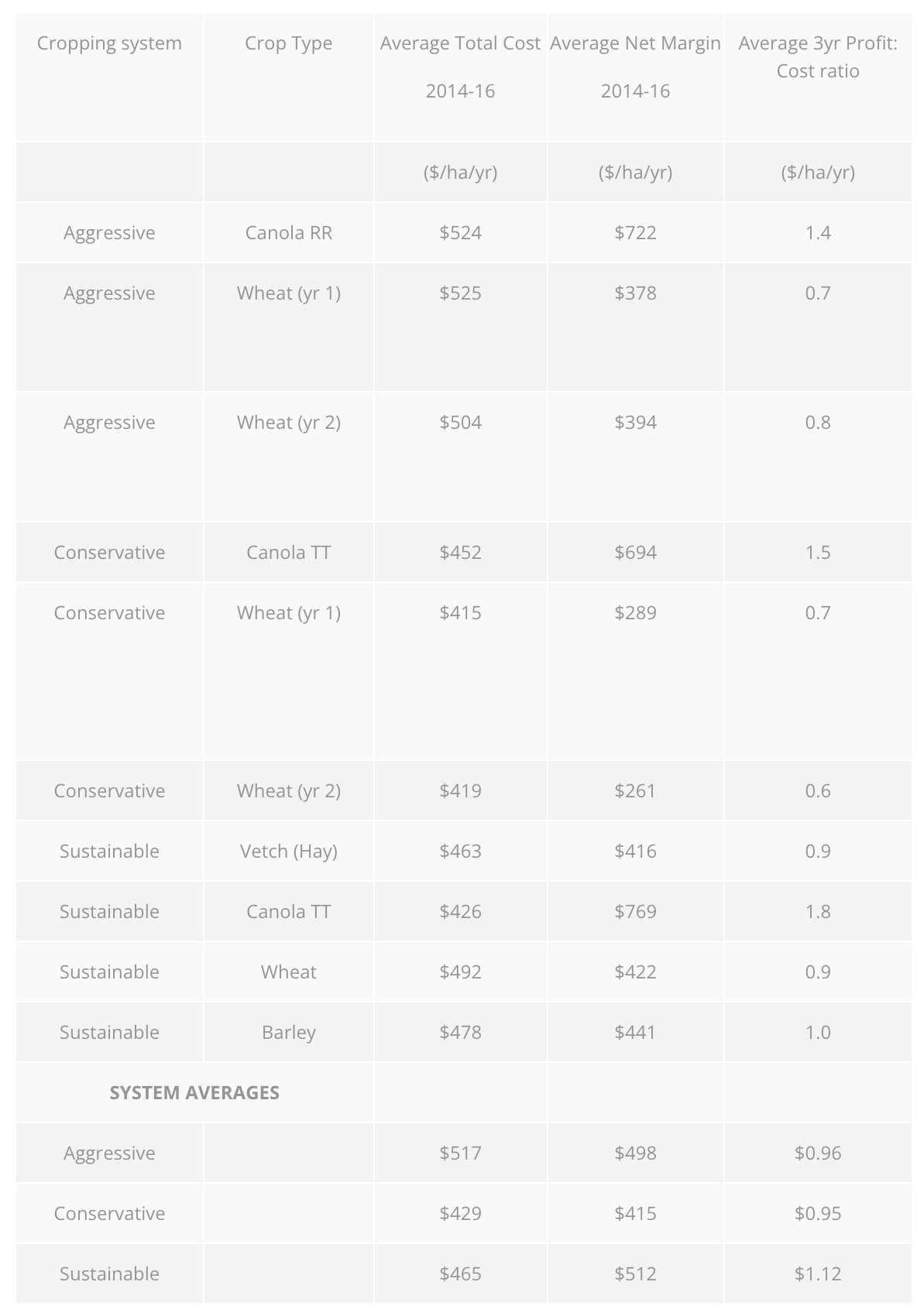
A fully phased systems experiment was established in Temora in 2014 at a site with high levels of Group B resistant ARG to examine if a diverse crop rotation (‘Sustainable’ – vetch hay-TT canola-wheat-barley) could improve the profitability of stubble retained no-till (Flexi-Coil tine seeder with Stiletto knife points and deep banding & splitting boots) and zero-till (Excel single-disc seeder with Arricks’ wheel) systems. Three cropping systems (Aggressive, Conservative and Sustainable) were compared with the rotations for each as Aggressive (RR canola-wheat-wheat), Conservative (TT canola-wheat-wheat) and sustainable (as above). In the cereal crops in the Aggressive and Sustainable system, new-generation pre-emergent herbicides (Sakura® and Boxer Gold®) were used for grass weed control. In the Conservative system, trifluralin and diuron were used for grass weed control in the tine system, and diuron alone in the disc system.
The introduction of diversity in the Sustainable system has allowed it to achieve a net margin ($512/ha/year) which is higher than in the Aggressive systems ($498/ha/year) and at lower cost ($465 cf $517/ha/year) and thus higher profit:cost ratio ($1.12 cf $0.98) (Table 6). The reduced costs in the Sustainable system are driven by lower fertiliser N inputs from the inclusion of vetch hay, which requires no fertiliser N itself and provides residual N for subsequent crops. The barley phase of the Sustainable system has also been more profitable than the second wheat crop in either the Aggressive or Conservative system (Table 6), despite record low barley prices in this 2016/17 season.
Tables 6: Average net margins (EBIT) – effect of crop strategy at Temora, NSW, 2014-2016
The Riverine Plains group compared a wheat-faba bean-wheat rotation against a wheat-wheat-wheat (+/- burning) and found there was no significant difference in wheat yield following wheat stubble that was retained or burnt (average 3.42t/ha), but there was a 2t/ha increase in wheat yield following faba beans. The wheat stubble also acted as a trellis assisting to keep the beans off the ground and improve airflow and the higher nitrogen concentration following the bean crop combined with the increased decomposition of the wheat stubble resulted in the bean crop “resetting” the system and burning was not required. Similar findings have been observed by the Hart Field Site group in relation to lentils using the wheat stubble as a trellis. Earlier maturing varieties such as Blitz were found to be taller with increasing stubble height (30 and 60cm stubble height cf 15cm or baled). They also found that the type of stubble was important for the following crop, with wheat maintaining its supportive structure better than barley.
Establishing crops with disc and tined seeders
It has been well documented that a disc seeder can handle higher stubble loads in comparison to a tined seeder, have less variability in seeding depth and higher sowing efficiencies than a tined seeder. Over the three year trial at Temora, there has been little difference in the net margin of either the disc or tine openers where ARG was effectively controlled by pre-emergent herbicides in the Aggressive and Sustainable cropping systems. However, in the Conservative system, the combination of trifluralin and diuron were able to achieve a reasonable ARG control in the tined system, but diuron alone was largely ineffective in the disc system, and this has reduced yields and profit in this system (Table 7).

Southern Farming Systems have been comparing the advantages of establishing crops with a disc and tined seeder over the past 3 years. They found that although there was no significant difference in wheat yield at the 95% confidence level (0.5 t/ha increase in yield at the 90% confidence level),
there were significant improvements in efficiencies in the disc system with quicker sowing, quicker
Table 8: Cost calculations for sowing efficiency, harvest efficiency and fuel usage in a Southern Farming Systems disc vs tine trial in Victorian HRZ in 2015.
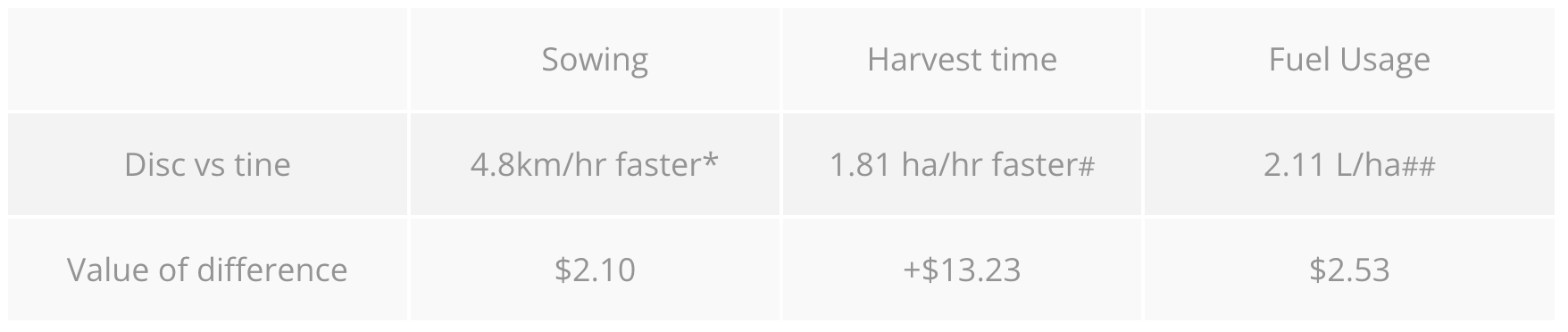
(* contract sowing at $45/hr, # increased speed at harvest $400/hr, ## fuel @ $1.20L)
harvesting (harvest high) and fuel savings in 2015 (Table 8). It must be remembered that both types of seeders have advantages and disadvantages in different circumstances and the main aim is to establish seed reliably in a wide range of sowing conditions!
Deep banding vs surface applied Nitrogen at sowing
One mechanism by which large amounts of retained cereal stubble can reduce yields in subsequent crops is through immobilization of N. Banding N fertiliser either at sowing using a deep, side or mid-row banders or in-crop using mid-row banders is a way of separating fertiliser N from high carbon stubble that microbes use as an energy source when immobilising N. In 2016, an experiment was established at Temora on 5.1 t/ha of retained wheat stubble where 122 kg/ha N as urea was either banded beside and below wheat seed using Stiletto splitting boots, or spread on the soil surface before sowing with the same boots. Starting soil mineral nitrogen concentration was 58 kg/ha N (0-150cm) and no additional nitrogen was applied. By Z30 more nitrogen had been taken up by the plant where the N was deep banded (4.3% cf 3.8%), a pattern which continued with greater plant dry matter and nitrogen uptake at anthesis and higher grain yield (Table 9). However, there was no significant interaction with the presence/absence of stubble, indicating that banding N may improve N use efficiency in all systems (with or without stubble).
Option 2: How to manage stubble if you have a flexible approach to retaining stubble
There are many reasons why a flexible approach to retaining stubble may be required as there is no perfect stubble management strategy for every year. Crop rotations, weeds, disease, pests, stubble loads, sowing machinery and potential sowing problems will largely dictate how stubble is managed
A flexible approach to manage stubble means crops can be harvested high or low depending on the season and situation, stubbles can then be grazed with considerable economic advantage, or straw baled and sold, or burnt.
Grazing: For mixed farmers, the option to graze the stubble soon after harvest can be quite profitable. In a long term no-till controlled traffic grazing experiment in Temora between 2010-2015 with crop rotation of canola-wheat-wheat, 4 treatments were compared including a full stubble retention system (nil graze, stubble retain) and a post-harvest grazing of the stubble (stubble graze, stubble retain). Each of these were split to accommodate a late burn pre-sowing (i.e. nil graze, stubble burn & stubble graze, stubble burn) (Table 10). All plots were inter-row sown with deep knife points and machinery operations conducted using controlled traffic. Stubble grazed plots were grazed within 2-3 weeks of harvest at approx. 300 DSE/ha for 5 days ensuring > 3t/ha remained for soil protection and water retention. All plots were sown, fertilised and kept weed free such that weeds, disease and nutrients did not limit yield. Over seven years, the experiment has shown that there is a $44/ha increase in gross income where sheep were used to graze the stubbles compared to nil grazing if no grazing value was assumed. This increase was related to higher yields and grain quality in subsequent crops driven by greater N availability in the grazed stubble. There was a $159/ha increase if a grazing value for the stubble was assumed (see GRDC paper 2015 Hunt et al. for details).
Table 10: Gross income per year averaged across two phases where stubble was either grazed post-harvest or not, and either burnt just before sowing or retained, 2010-2015 at Temora, NSW.
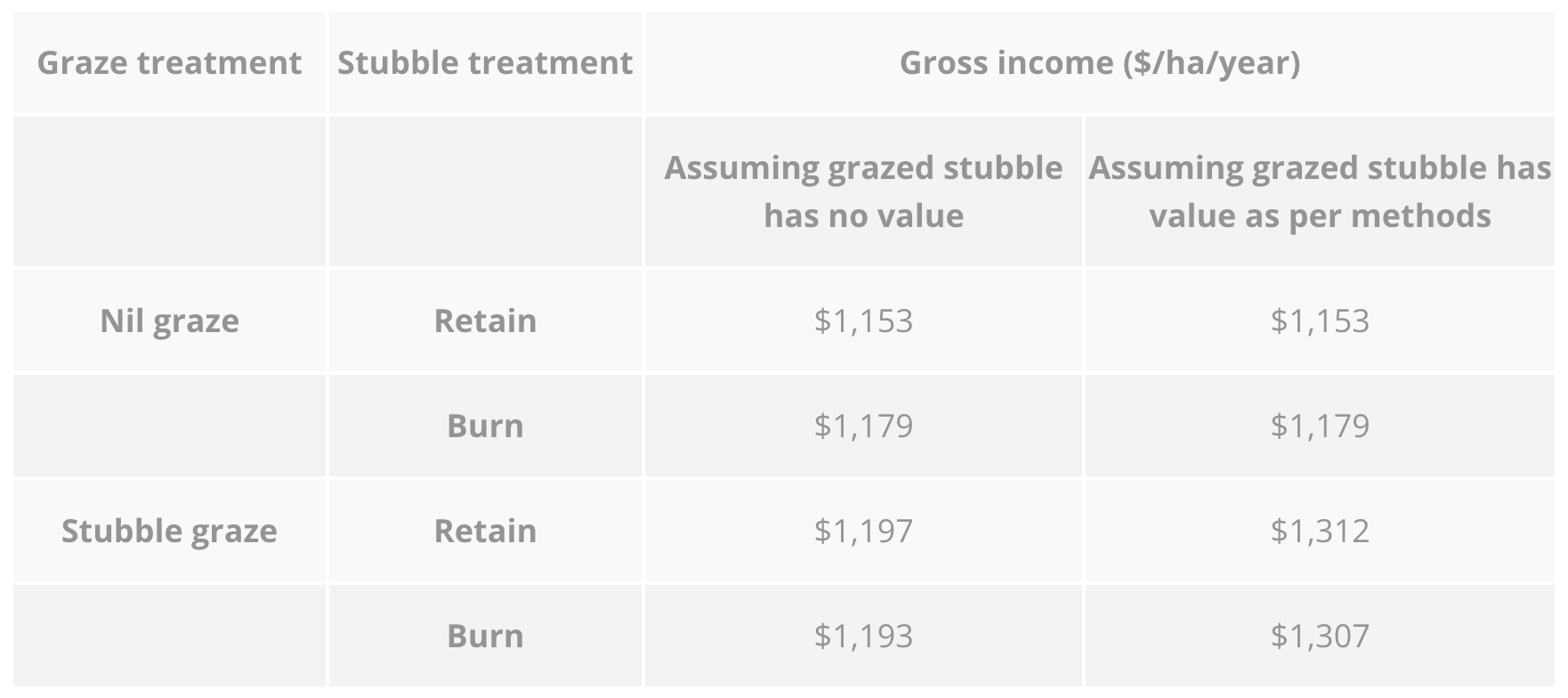
One of the negatives of using a less diverse rotation (canola-wheat-wheat) in a full stubble retained system is that there can be a significant reduction in the grain yield in the 2nd wheat crop (Table 11). This difference is presumably due to lower N availability due to immobilisation in the retained stubble treatment (as establishment was good and weeds, pests and disease were controlled).
Similar results were observed in a crop systems experiment where wheat (1st wheat) was either sown into canola stubble or into 7.2 t/ha wheat stubble (2nd wheat) in April 2016. The wheat was deep banded with 40kgN/ha at sowing in both treatments to assist in supplying N to the crop,
however, there was a 0.6-0.8t/ha reduction in wheat yield in the 2nd wheat crop (Table 12). Many farmers in the south west slopes also observed decreases in the grain yield of their 2nd consecutive wheat crop compared to wheat sown after canola in 2016 in stubble retained systems.
Table 12: Wheat grain yield in crop following canola (wheat yr 1) compared to 2nd wheat crop at crop systems experiment at Temora, NSW 2014-2016 in disc and tines x systems
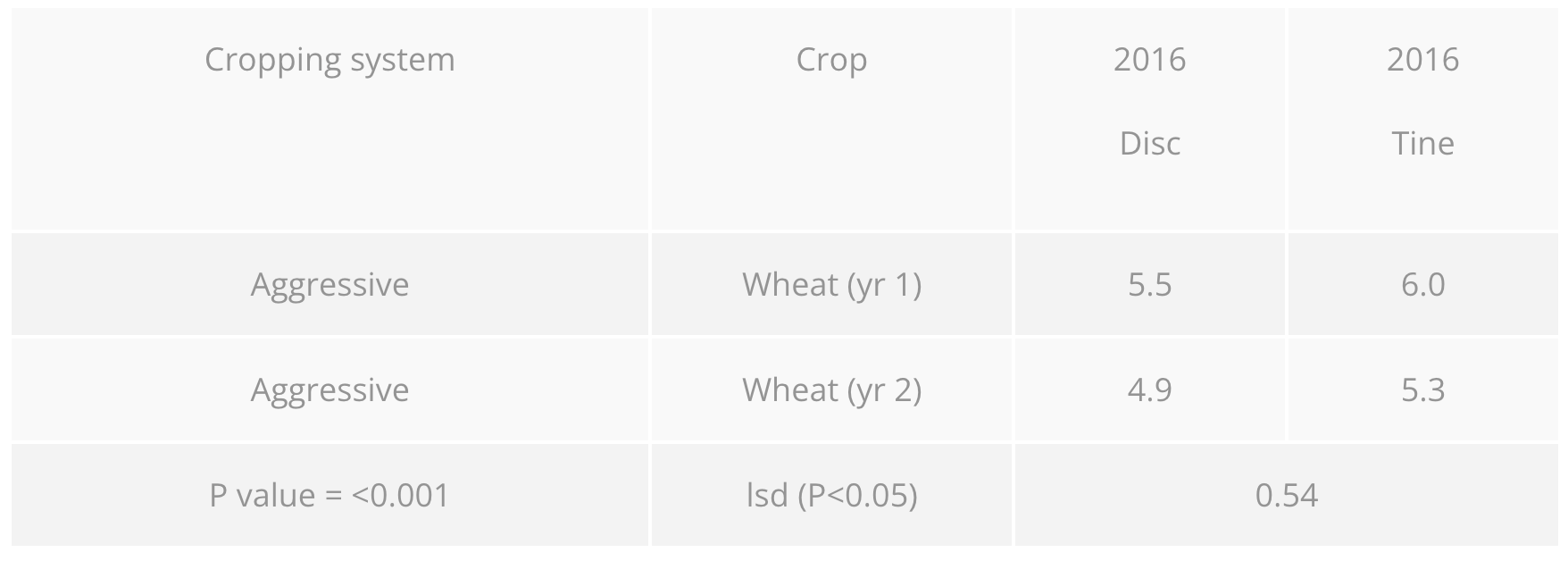
Computer applications (Apps) for stubble management
GRDC Project YCR00003, led by Yeruga Crop Research is finalising a computer/smart phone application (App) which may be of great benefit to farmers and consultants. It provides a quick and efficient method to indicate what the benefit or cost could be for different stubble management decisions such as narrow windrow burning, burning or baling a crop to reduce stubble. A couple of examples are highlighted below for narrow windrow burning (Figure 1) and baling (Figure 2) the stubble from a 5t/ha wheat grain crop.
For more information, contact Yeruga Crop Research. The tool was developed by Stefan Schmitt in conjunction with Bill Long, Mick Faulkner, Jeff Braun and Trent Potter.
Narrow windrow burning (NWB): NWB has been practiced for several years now and has proven to be an effective tool in reducing weed seeds. One advantage of NWB compared to entire paddock burn is the reduction in nutrients lost from the stubble residue. The stubble management optimiser indicates that approximately $22.60/ha is lost from the paddock if NWB compared to approximately $76/ha if the entire paddock is burnt (Figure 1). One constraint with narrow windrow burning as AHRI indicated, would be the increased risk if the wheat grain yield was greater than 2.5t/ha (> 4t/ha stubble residue). In 20114/15 NWB was successfully undertaken in wheat crops between 3-3.75t/ha with an estimated stubble load of 4.5-6t/ha in the Riverina, NSW (Grassroots Agronomy 2014). Due to the high stubble loads in 2016/17, narrow windrow burning may be restricted to canola stubbles and other lower DM crops. It must be acknowledged that a wet cool autumn can severely reduce the efficiency of burns leading to weed strips in the paddock.
Pests
Invertebrate and vertebrate pests will potentially be a major problem in 2017, and may in some cases provide justification for strategic burning and tillage. Snails, slugs, mice and other insect numbers are currently being monitored and the cool wet spring has provided excellent conditions for increased numbers. The large stubble loads and plentiful grain on the ground from shedding and harvest losses is providing an excellent environment for breeding, so this needs to be factored into the equation if retaining stubble in 2017. Monitor mice numbers after harvest and bait as required.
The wet cool spring in the Victorian HRZ has resulted in an increase in the population of slugs and earwigs pre-harvest. The populations of slugs (Figure 3) and earwigs are expected to pose a greater threat to establishing crops in 2017 (Figure 3). Plan to roll then bait at sowing for slugs, monitoring problem areas and keep baiting if using cheap bran based baits. More information on slug and snail baits may be found at: https://www.pir.sa.gov.au/__data/assets/pdf_file/0004/286735/Snail_and_slug_baiting_guidelines. pdf
Snails: A field trial on the Lower Eyre Peninsula, SA demonstrated the benefits of using mechanical snail control methods over retaining tall standing stubble – either light tillage or heavy (ribbed) rolling – in conjunction with a baiting strategy (Figure 4). Carried out under optimal conditions (late February, 35°C + and low humidity) the mechanical treatments proved effective to reduce snail numbers initially, whilst also appearing to improve the accessibility of baits applied in March.
This project demonstrated a number of key points for the coming growing season. Mechanical rolling, light tillage or cabling in the right conditions (hot & dry) is an effective action which can reduce the breeding population before a crop is present when there is less time pressure from other tasks (Figure 4). Baiting efficacy after this mechanical strategy is likely to be improved, as snails will find the baits easier in a rolled/tilled surface, rather than where tall stubbles remain, providing “bridges” for snails over and around baits.
Baiting should not be applied during the same hot, dry conditions as cultural controls! Baiting should commence during moist, cool conditions. The same field trial incorporated time lapse video and micro weather station monitoring to monitor snail activity and found high levels of night time activity where RH went above 85-90 %, and feeding during wet periods in early March.
The key with all management strategies is to try to reduce the breeding population prior to reproduction. This research showed snails feeding and increasing sexual maturity during March with egg laying taking place April 21st – prior to the break of season and seeding. Baiting at seeding may be too late where snails have already laid eggs. For further information https://www.pir.sa.gov.au/research/services/reports_and_newsletters/pestfacts_newsletter/pestfacts_issue_15_2016/summer_snail_activity_and_control
It is also important to consider using insecticide seed treatments in canola and legumes with to supress or control early seedling pests including earwigs, slaters, aphids, millipedes and earth mites (always adhere to label guidelines).
Herbicide efficiency in retained/burnt stubble systems
Two separate experiements were setup in the EP and LowerEP to compare the effectiveness of pre-emergent herbicides in stubble retained systems compared with burnt stubble in 2015. In both experiments, cereal crops were harvested low with straw spread evenly across the swath and either retained or burnt late pre-sowing. Standing stubble was also compared at one experiment. Residual stubble load was between 5 to 6.9t/ha. In both experiments there was no significant difference in the effectiveness of Sakura ®, Avadex Xtra ®, or Boxer Gold ® on the emergence of ryegrass post sowing where the spraying water application rates was 100L/ha or higher. An important finding was that a spray water volumn of 100L/ha was required to improve the effectivness of the herbicides, but this must be put in context with spray quality and nozzle type (Table 13).
Table 13: The reduction in ryegrass populations with increasing water rate in the LEP in 2015
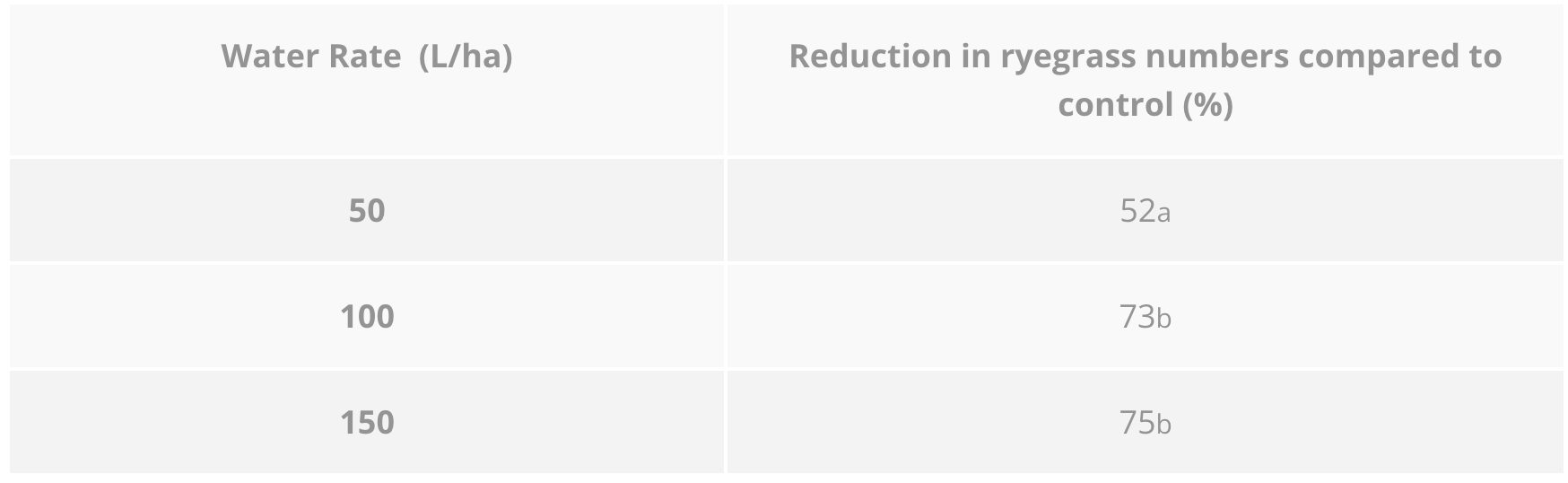
The wet season in 2016 throughout much of south-eastern Australia resulted in farmers not being able to manage weeds to their normal high standard. The combination of high annual weed populations in large cereal stubble residues may mean that farmers may need to consider burning problem paddocks in 2017 to reduce weed populations and improve herbicide effectiveness where stubble loads and ground cover percentage is high. The higher the percentage of ground covered by residue, the higher the percentage of herbicide captured by the stubble (Shaner 2013).
Burning
Burning is an effective, inexpensive method of removing stubble, assisting in reducing disease carryover, reducing certain seedling pests and weed populations and if using a flexible managament approach should be considered in strategic situations. With careful planning and diverse management, burning can be kept for those occassions where the system needs to be reset which can result in farmers retaining stubble for another series of years. A late burn, conducted wisely just prior to sowing to minimise the time the soil is exposed is one option farmers may need to consider in 2017. In a long term experiment at Harden in NSW, burning late just prior to sowing is still producing some of the highest grain yields after 28 years of continuous cropping, which would indicate that a single strategic burn to re-set the sequence may do little damage. In general, late burning resulted in the largest yield benefits in wetter years, and had little impact in other years. Across a number of trials in the Riverine Plains, Victorian HRZ and those conducted by the MacKillop Farm Management group, the comparision between burning or stubble retain treatments has resulted in variable results. More often than not, there was no significant difference in grain yield between the burn and stubble retain treatment in 2014-15. However, in some years the burn treatment has resulted in good early crop vigor, more early biomass and the crop has become moisture stressed with reduced grain yield where there has been an early end to the season with a hot and dry spring.
Some negatives to burning include loss of nutrients (amount depends on temperature), increased regulation and potential losses of soil from erosion. Increasing restrictive regulations are being implemented that also make burning more difficult in the future. In some shires, a single burn requires 6 people, 2 fire control units (1 with 5000L and the other with 500L) and you are not able to leave the paddock until NO smoke is detected.
Conclusion
This paper has outlined many of the overall findings from the “Stubble Initiative” project to date and incorporated these into a series of regional guidelines to assist farmers deal with the high stubble loads from the 2016/17 harvest.
It is extremely important for farmers to NOT compromise managing weeds, disease or being able to sow their crop in 2017 due to excessive stubble loads. Farmers need to be pro-active in managing their stubble which should have commenced before harvest and continued until sowing in 2017 to ensure their stubble management will suit their seeding system. It has been shown that by diversifying a crop rotation (increasing the number of pulse crops and barley), deep banding nitrogen, managing pests and diseases, managing stubble by mulching, baling, grazing and if sowing with a tined seeder, sowing at 15-19 degrees from the previous direction, that it is easier to manage stubble without the need to burn. However, if the stubble load remains too large or the potential weed/disease/pest burden remains too high, then a one off strategic late burn can be used to “re-set” the system. In a year where stubble residue loads are greater than ever before experienced, it is also important that as new techniques are tried, to keep monitoring the results early to see how effective the actions have been.
References
GRDC Stubble Management Fact Sheet, March 2011: Strategies to manage winter crop stubbles without reaching for the matches
GRDC Managing Stubble Booklet, May 2012: https://grdc.com.au/~/media/2B5EFD71C2D04212827E2E045E022DE6.pd.
Mallee Sustainable Farming Inc: Stubble Management – A guide for Mallee farmers (2013)
Farmlink Guideline No 3. “What sort of stubble? It all begins at harvest” https://www.farmlink.com.au/project/maintaining-profitable-farming-systems-with-retained-stubble. GRDC Project 000174 – Maintaining profitable farming systems with retained stubble in NSW SW slopes and Riverina.
Riverine plains Stubble management guideline No 1. “Managing stubble at harvest improves sowing success” –. GRDC project RPI00009 – Maintaining profitable farming systems with retained stubble in Riverina Plains region.
Stubble management – an integrated approach (2010): EH Graham Centre for Agricultural innovation
Farmlink Guideline No 4. “Contractors and stubble. Engaging contractors with equipment suitable for stubble retention” https://www.farmlink.com.au/project/maintaining-profitable-farming-systems-with-retained-stubble. GRDC Project 000174 – Maintaining profitable farming systems with retained stubble in NSW SW slopes and Riverina.
Efficacy of harvest weed seed control techniques in Southern Victorian HRZ – Southern Farming Systems.
Grassroots Agronomy and GRDC extension notes. “Narrow windrow burning in southern NSW … the good the bad and the ugly”
Hunt J, Swan T, Pratt T, Rheinheimer B, Goward L, Jones K, Kirkegaard J (2015) The effect of grazing and burning stubbles on grain yield and quality in no-till and zero-till controlled traffic farming systems in SNSW. GRDC Updates Adelaide and Wagga.
Kirkby C A, Richardson A E, Wade L J, Conyers M, Kirkegaard J A (2016). Inorganic nutrient increase humification efficiency and C-sequestration in and annually cropped soil. PLOS ONE DOI: 10.1371/journal.pone.0153698 May4, 2016.
Shaner, D (2013). Interactions of herbicides with crop residue. GRDC Advisor Update, Goondiwindi.
Acknowledgements
I would like to acknowledge all the collaborating scientists, technicians, staff, farmers and consultants from all of the organisations and groups who have contributed significantly in terms of their time and research capability to each farming systems group to ensure the project in their region is producing the highest quality of work. To keep the list of co-authors to one cricket team (rather than many), only one person from each group was included as authors.
Contact details
Tony Swan
Business Address: CSIRO Agriculture and Food, GPO Box 1700, Canberra ACT 2601
Phone: 0428145085
Email: tony.swan@csiro.au
Harvest 2017 – GRDC Stubble Project Trial Plots Completed
Wednesday 29 November 2017 heralded the final stubble project plot to be harvested at Northparkes Mine. The other two sites were at Tottenham and Mumbil Creek. These trials have been sown for five years under the GRDC funded initiative “Maintaining profitable farming systems with retained stubble in Central West NSW”.
This project has explored the many variables with retaining stubble, particularly in wet seasons like 2016. As well as the trials comparing retained/cultivated/burnt/mulched stubble, many farmers and contractors were interviewed for case studies and specialist speakers presented topics on stubble management at spring field days. Publications are in the process of being finalised and a more complete set of management tools now exist.
The overall quality of grain was down this year due to widespread frosts and a long, dry period through winter and spring. Feral pests also played a role in damaging some sites through spring. Results from the trials will be made available as soon as possible in 2018.
2017 Commercial Stubble vs Canola Harvest Report
2017 Seasonal effects of strategic stubble treatments on Canola in CW NSW
Background
CWFS conducted trials across the central western district that:
investigated the impact that different stubble treatments (burning, cultivation, harrowed or standing stubble) imposed just prior to sowing have on the growth and yield of winter crops, measured using large plots
evaluate any grower management practices that result in yield responses