Soil Acidity & pH Management
LIME IT OR LOSE IT!
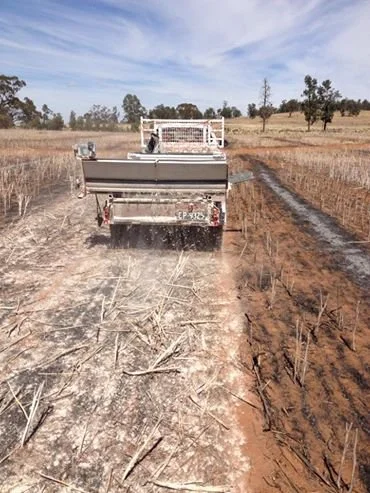
Over the past 2 decades a number of initiatives have identified soil acidity as a serious issue within the Central West of NSW. In early 2000; CWFS, GRDC, NSW Agriculture and the NSW State Government, via the Acid Soil Action program, identified that 57% of the red soils sampled within Central Western NSW had a pH of 5.0 or less. It is well documented that a soil pH of less than 5.5 will negatively impact upon non tolerant grain varieties and their associated yield.
Since the Acid Soil Action program, there has been an increase in continuous cropping and an associated increased usage of nitrogenous fertilisers within the grain growing areas of the southern GRDC region – of which the CWFS districts are a component – both factors have been demonstrated to increase the occurrence and rates of soil acidification.
Due to the negative impact of soil acidity upon Grain yield and the long term impacts upon the sustainability of the grains industry, GRDC have funded the next Soil Acidity awareness program with the Western Australian Department of Agriculture and Food (DAFWA), Southern Farming Systems (SFS), Primary Industries and Regions SA (PIRSA) and Central West Farming Systems (CWFS) partnering to address this issue in within the vulnerable soil types of their regions located within the Southern GRDC area.
The most effective method of addressing soil acidity within a cropping system is the application of Lime. Consequently this project is primarily extension based with the main focus being to raise the profile of the benefits of applying lime within at risk regions and soil types.
The CWFS component of the overall project is entitled: “Soil acidity and pH management for Central West farming districts” and is comprised of 6 main objectives:
In first instance sites within different at risk regions are to be resampled on an annual basis. In 2014, 5 sites with a pH ranging from 4.8 to 5.2 within the 0-10cm section of the soil profile were resampled. Initial results indicate an increase in acidification within the 0-10 depth with a pH of 4.2 encountered and the occourance of subsurface acidification.
A project steering committee has been established that is comprised of: agronomists, financial representatives, lime suppliers and landowners. This committee will guide the project and assist in the remediation of soil acidity within the CWFS region via their day to day contact with landholders and hands on knowledge of the issue.
Workshops targeted to growers within at risk regions will be delivered to raise the incidence of soil acidity within their own backyard. The workshops will cover what has been identified via the sampling program(s), causes of soil acidification, economic and environmental impacts of soil acidification and, best practise methods of addressing the issue via the application of Lime.
An advertising strategy targeted to at risk regions will be developed. It will identify the occurrence of soil acidification, causes, impacts and the benefits of Lime application. This will also include this web page as a component of the existing CWFS web site. This will enable a lasting project legacy beyond the life of the project.
To further assist in leaving an ongoing project legacy a young soil acidity champion has been identified and will be trained in the causes, impacts and remediation of soil acidification.
On properties that have identified soil acidity issues, in cooperation with local land holders and Lime suppliers, trials will be established to demonstrate first hand to landholders the benefits of applying lime. These will also form a basis for further extension activities.
The success of: Soil acidity and pH management for Central West farming districts, will be gauged by a demonstrated increase in lime sales within the Central West Region of NSW. To further raise the profile of the benefits of Lime within a cropping system, negotiations are currently underway between CWFS and the University of Southern Queensland with regards to a PhD project which will officially identify the potential benefits of applying Lime to sodic soils. If successful this project will be conducted at the CWFS Condobolin irrigation research block.
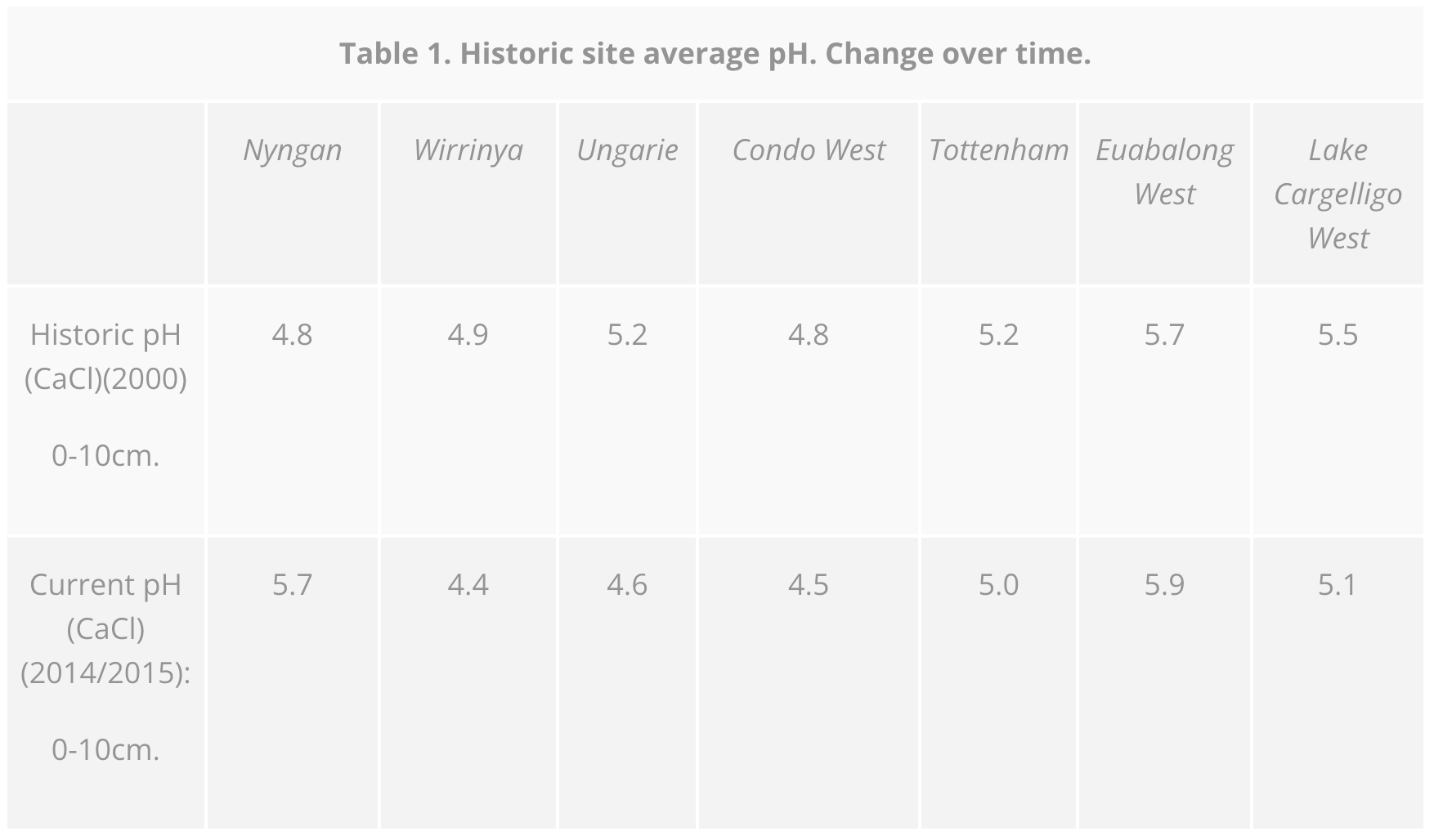
Comparison of the pH levels for the historic sites demonstrate an increase in acidification overtime at all sites except for the Nyngan site where the area has been returned to permanent perrenial pasture.
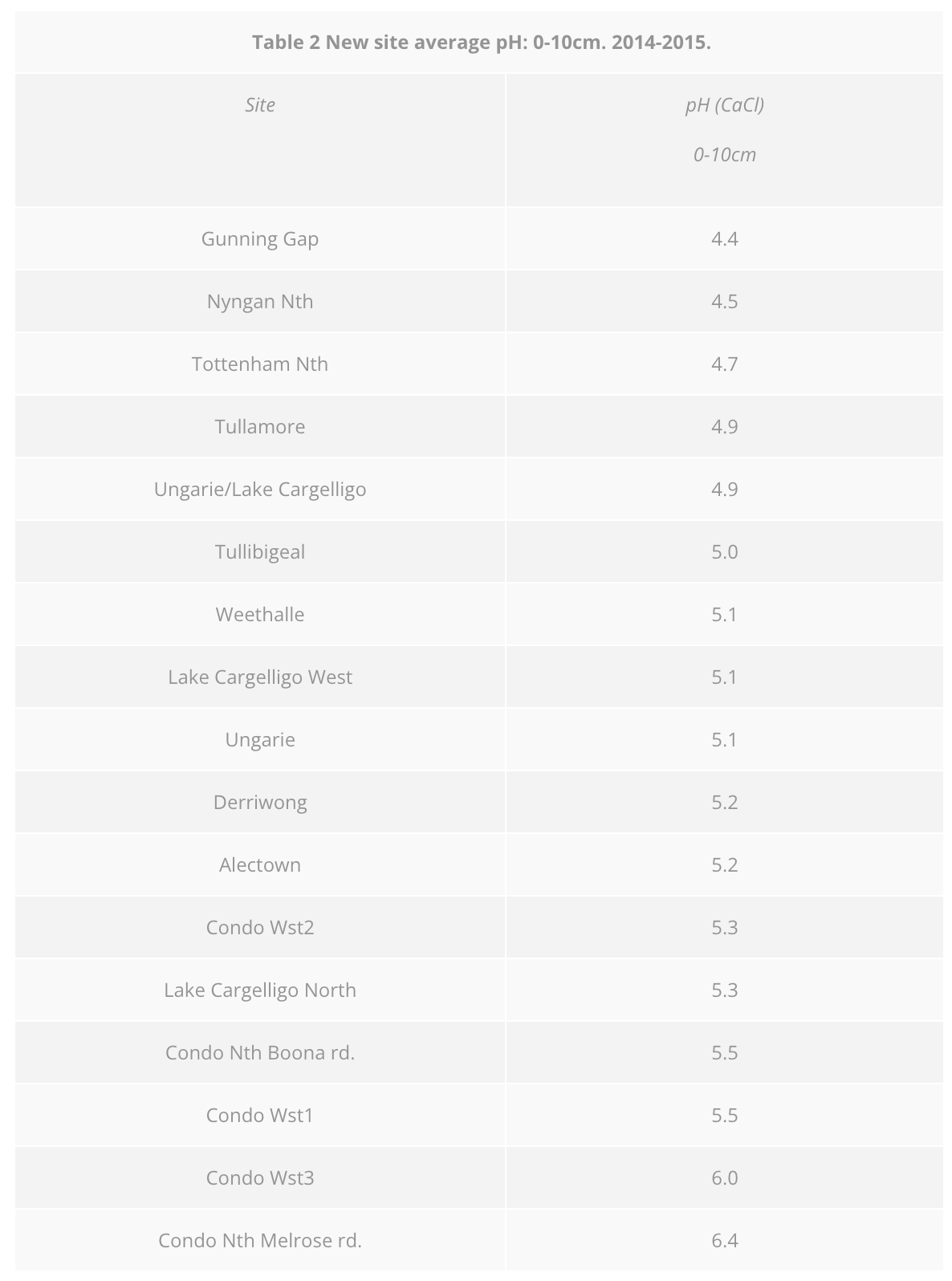
In 2014 all of the “new” sites sampled, where lime has not been applied, pH levels are significant enough to impact upon plant growth with the occourance of subsurface acidification occouring at 2 out of 5 sites.
Soil pH change over time and the outcomes of a farmer led Lime trial, west of Condobolin NSW: an Overview.
In 2014, assessment of a previous soil pH monitoring site, sampled 14 years prior, and a farmer led on-farm lime trial was conducted west of Condobolin NSW. In the on farm lime trial the farmer had independently applied 3 different rates of lime to an area that is subjected to dryland cropping and grazing. The impacts of the varying rates of Lime were assessed via: soil coring, in-crop wheat biomass assessment, tiller counts and volume of grain achieved at physical maturity. Results showed that at the previous soil pH monitoring site, pH levels had decreased and subsurface soil acidification was occurring down to 30cm; and in the on farm lime trial the higher application rate of Lime achieved a higher pH in the top 10cm of the soil profile, prevented soil acidification from reaching lower sections of the soil profile and achieved notably higher plant biomass / number of tillers and volume of grain when compared to no Lime or reduced Lime applications.
Key Points:
Visually the impacts of Lime may not be seen, but the benefits of Lime are evident when comparing Limed areas plant biomass and yield with that of un-Limed areas.
Application of Lime has been shown to halt sub soil acidification which is costly to address and will impact upon future sustainability and productivity of an agricultural enterprise.
Appropriate rates of Lime are shown to increases yield.
Conclusion
Results from the on-farm investigation demonstrate that where cropping activities occur within the Red Clay Loam soils of the Central West of NSW, soil acidification can increase in magnitude over time and that lime is required to ameliorate the effects of agricultural activities; i.e., product removal and nitrogenous fertilisers, which are known to cause soil acidification (Gazey & Davies, 2009). Results also demonstrate that without the application of Lime to a cropping environment, over time, acidification will move down through the soil profile causing sub soil acidification. Subsoil acidification further impacts upon plant growth (Jenson 2010) and associated yield as well as increasing the cost of acid soil rehabilitation (Gazey & Davies, 2009). The long term benefits of applying Lime within the Red Clay Loam soils of the Central West of NSW are clearly demonstrated via the on farm trial; ie,
Where the maximum amount of Lime was applied; a “normal” increase in pH is viewed descending through the profile, the soil pH levels are such that plants can effectively access nutrients within the soil profile, which is reflected in the greater biomass /number of tillers and volume of grain.
Where less Lime was applied pH levels are still appropriate for plant nutrient uptake however a reduced plant biomass /number of tillers and volume of grain was achieved when compared to the maximum volume of Lime.
Where no Lime was applied, Sub surface acidification is occurring, and the lowest biomass /no of tillers and grain volume was observed.
This on farm Lime trial clearly shows that in a cropping environment, appropriate amounts of Lime are required to maintain soil pH. If Lime is not applied to address factors such as Nitrogenous fertiliser applications and product removal, acidification of the top section of the soil profile will occur. If Lime is not applied at this stage acidification will move down through the soil profile causing subsurface acidification. As soils become more acidic nutrients required for plant growth become less available.
Appropriate rates of Lime applied to a cropping environment mean that the pH of the soil will allow plants to effectively access available nutrients which translate into plant growth, grain yield and maximising the value of fertiliser inputs.
Lime and Youth Champion
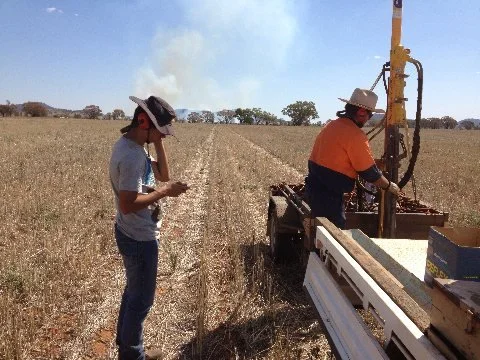
Soil acidity has a devastating impact on the soil profile and the soil’s role in plant production. Effects of soil acidity severely hinder the normal growth and development of plants. This is due to the decreased availability of nutrients when acidification occurs. The pH of the soil becomes lower when common farming practices are continuously applied which include:
herbicide and pesticide use
cultivation and sowing
product removal
fertilizer use and/or use in excess
Soil acidity is not only a concern in the top soil of the soil profile but can also cause the sub soil to acidify as well. Sub soil acidification occurs when the leaching of acidifying substances from the top soil maneuvers its way down through the soil profile. The increase of acidity in the sub soil restricts the availability of essential nutrients to the plant. The roots of plants generally spread deep into the soil profile and it is vital for nutrients to be available for the well-being and correct functioning of the plant. As a consequence of subsoil acidity, plant roots become stunted and are unable to access enough water and nutrients to survive.
Soil acidity impacts upon the sustainability, productivity and profitability of a farming enterprise. Without the implementation methods to control acidity, soils can be forever depleted of the characteristics that enable them to support plant production. Deciding not to employ a control method as means of increasing sustainability will impact upon on potential productivity and profitability gain if control methods were employed. However, the problem of soil acidity can be almost eliminated from a plant production scenario with the application of lime.
Lime is a substance that amends the pH level in soils to a more suitable value, enabling plants to be healthy and function properly. Lime is able to do this due to its nature of bonding to the free hydrogen ions present in the soil. The pH scale is an indication of how many free hydrogen ions (H+) are present. When the pH is low, that means that the amount of H+ is high. To rectify this, lime is added which increases the pH to a more suitable level by reducing the amount of H+ in the soil.
Lime is vital for any farming enterprise that implements continuous farming practices. Without the solution of lime to soil acidity caused by these practices, soils would be unable to uphold the characteristics that enable them support plant growth and development. Thus, impacting upon the sustainability of the land as well as causing a substantial reduction in plant productivity. Liming schemes are crucial to farming enterprises so that soil condition is improved which will prolong the enterprise and be profitable for years to come.
2015 Soil Acidity and pH Management for Central West Farming Districts
2015 sampling for the CWFS, GRDC funded, soil acidity project is now complete.
To provide a brief overview of the outcomes:
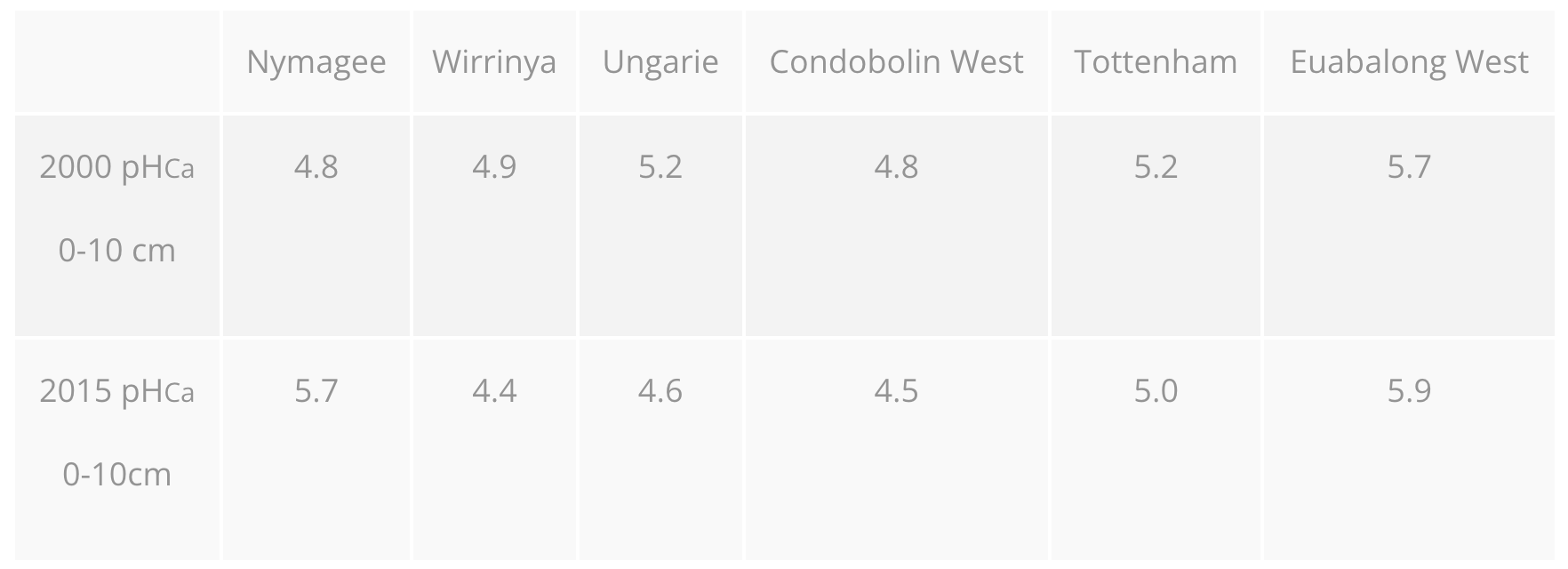
As shown in Table 1, five out of seven sites sampled in the year 2000, as part of a previous soil acidity project, demonstrate an increase in acidification.
Out of 17 “new” sites sampled, 13 have recorded a pH (CaCl) of less than 5.5 (Table 1.) A pH less than 5.5 is below the optimal level to prevent the occurrence of subsoil acidification (Soilquality.org.au).
Our project partners have also been busy with soil pH activities. The links below will take you to: 1) a paper created by PIRSA (South Australia) – Identifying barriers to liming; and, 2) from Southern Farming Systems in Victoria where they have been conducting lime trials.
Sampling so far has demonstrated that soil acidification is a widespread problem within our region. Due to the long term and short term negative impacts of acidic soils upon our agricultural and environmental systems a pH of less than 5.5 needs to be corrected via the application of agricultural lime at targeted rates – because If you don’t lime it you’re going to lose it.
For further information please call Nick Hill on: 0437 612 140.
The Economic Benefits of Lime
Author: Michael Quin 12/8/2015
The benefits of lime prove to be not only economically significant but the consequence of improved soil quality and increased nutrient uptake makes cropping more sustainable. However, a liming scheme does not result in overnight success. The amelioration of acidified soils is a lengthy process but it is worthwhile in the retention of a healthy, vibrant and sustainable soil. The longer the beneficial effects of lime persist, the more the investment in liming becomes economically favorable (1). Soil quality, nutrient availability and long term sustainability are three critical concepts to consider when dealing with soil acidity.
Soil quality
Reduced soil quality is of detriment to the growth of plants and must be ameliorated in order to achieve successful yields. As soil quality decreases, major components of soils that support the growth of plants degrade and cease to be of any benefit to the plant. A consequence that may come of this is the decreased rate of root elongation. Subsoil constraints such as acidity result in decreased rates of root elongation and limit the plant’s ability to access water and nutrients (2). Subsoil acidity is caused by the excess application of acidic substances such as ammonium fertilisers. Surface liming is a common practice for ameliorating topsoil acidity in the relatively short-term, but is generally slow in ameliorating subsoil acidity (4). It is often too late to rectify the effect of acidity on the sub soil due to the ineffectiveness of lime reaching the subsoil and being able to reverse the effect of acidity. This further extends the need for the introduction of liming schemes to prevent the discontinuation of farming practices due to unmanageable acidic soils.
Nutrient availability
Nutrient availability in soils varies with the level of the pH. When acidity is increased, important nutrients such as nitrogen and phosphorus are less available to plants whilst nutrients only needed in trace amounts such as aluminum and manganese are increased. This can lead to Aluminum and Manganese toxicity resulting in a dramatic decline of plant growth. Lime substantially reduces the level of exchangeable Al and exchangeable Mn whilst raising soil pH by about 1.0 unit. Liming soils can remove the toxicities of aluminum and manganese and dependent on the extent of acidity and species (i.e. wheat, canola, etc), plants may differ in their response to soil amelioration with lime (3). A pH level of 5.5 is often seen as the optimum value for the growth of the plants. The nutrients available to a plant are largely dictated by the pH levels and therefore must be administered with lime in order to ensure growth and development within an acidic soil.
Long term sustainability
Due to the common constraints of partaking in a soil acidity amelioration scheme, the investment in liming has been a questionable proposition for many farmers (1). However, farmers must implement long term sustainable practices, such as liming, in order to maintain soil quality for the continual process of product removal. In order to continue a cropping enterprise, certain precautions must be carried out to ensure that soils do not degrade to a point where they do not provide an ability to uphold plant growth. Nor should soils be at state where their effect on the growth of plants has a negative impact rather than a positive one. Therefore liming schemes are an appropriate solution to this problem and ensures the longevity of soils that may be succumbing to acidity. The long-term residual benefits of limestone have been shown to extend for beyond 8-12 years and indicate that liming should be profitable in the long term (1). This reiterates the common notion of liming every 10 years in order to maintain the optimum pH levels for the production of crops. By implementing these procedures, long term productivity is assured and therefore upholds the consistent productivity of high quality yields for years on end.
Due to continual farming practices, soil acidity will forever exist to be of detriment to yields and hence economically unfavorable. Therefore, it is crucial to ensure that liming schemes are undertaken because their long term effect is vital for the continuation of cropping and also profitability.
Reference list
K. Conyers, C.L. Mullen, B.J. Scott, G.J. Poile and B.D. Braysher. 2003, Australian Journal of Experimental Agriculture, 43, 71-78
T. F. Wong and S. Asseng. 2007, Plant Soil, 297, 29-42
D. Brooke, D.R. Coventry, T.G. Reeves and D.K. Jarvis. 1989, Plant and Soil, 115, 1-6
Tang, Z. Rengel, E. Diatoff, C. Gazey. 2003, Field Crops Research, 80, 235-244
The Chemical and Structural Benefits of Lime on Soil
The application of lime provides both vital chemical and structural benefits to soil. Their role is pivotal in combating acidity and dispersion issues associated with soil. The addition of lime in the form of calcium carbonate acts to consume hydrogen ions contributing to acidity as well as removing thick cation layers around clay particles ensuring structural stability of the soil.
The most important role of lime is to ameliorate the effect of acidity on soil, thus ensuring that acidity is not the cause of reduced plant health. Hydrogen ions have a disastrous influence on plant growth and can be improved when the carbonate portion of lime reacts with the soil. Oxygen associated with carbonate binds to the hydrogen ions located in the soil to form water. It does so by temporarily forming hydrogen carbonate which then transforms into water and carbon dioxide. Therefore, a large majority of hydrogen ions are converted into water and no longer pose a threat to plant health.
An additional role of lime is the improvement in soil structure and aggregate stability. The calcium portion of lime displaces substances such as hydrogen and aluminum located around the clay particles. Calcium has a smaller molecular weight in comparison to these substances and the area between the clay particles is therefore reduced. The advantage of this occurring is that a reduction in space results in a smaller distance between clay particles and this creates weak bonds of attraction called dipole forces. This binds clay together and although the dipole forces may be very weak, there are quite a number of these attractions overall contributing to make strong cohesive bonds. These strong cohesive bonds form aggregates and ensures that the soil does not deteriorate into its individual sand, silt and clay components as is the case with dispersion, which is not favorable for plant growth.
The chemical and structural effects of lime are essential to soil upholding sufficient means of supporting plant growth. The conversion of hydrogen ions into water and the added benefit of structural stability are key drivers for the use of liming to be undertaken.
Article produced by our Lime and Youth Champion Michael Quin.
Soil Acidity – Crop Yield Impacts and Management in Central West NSW
Helen McMillan and John Small
Central West Farming Systems
GRDC Project: CWF00019 Soil acidity and pH management for central west farming districts.
Key Words: pH, acidification, lime, legumes
Take home messages
Soil acidification is a natural process accelerated by high crop yields and fertilizer use. It is an unseen cost of doing business.
To maintain a good soil pH profile, producers should aim for a pHCa above 5.0 in the 0-10cm of topsoil or 5.5 if subsoil acidity issues are present. The target in the 10-30cm zone is greater than pHCa8.
Correct pH is paramount when growing legumes, especially if the decision to grow them is to increase soil nitrogen levels.
Liming needs to be thought of as a farm input, like checking and changing the oil in the tractor (maintaining capital), rather than buying urea (dollars returned per dollar invested).
Background
Soil acidification is not as obvious as other soil issues such as salinity, erosion or structural decline. Symptoms are less visible, production declines are gradual and these changes are often attributed to other factors such as weather. To maintain a good soil pH profile, producers should aim for a pHCa above 5.0 in the 0-10cm of topsoil or 5.5 if subsoil acidity issues are present. The target in the 10-30cm zone is greater than pHCa 4.8.
In soils where aluminium is present, a small drop in pH can result in a large increase in soluble aluminium which retards root growth, restricting the crops ability to access water and nutrients. At harvest this results in a yield penalty and smaller grain size, usually most noticeable in seasons with a dry finish as plants have restricted access to stored subsoil water for grain filling.
Crop types and varieties vary greatly on their ability to tolerate soil acidity and high aluminium levels. Symptoms of acidity damage are difficult to see in the crop above ground and may also be misdiagnosed as environmental, such as dry springs. A key area to take note of is legume acidity tolerance and how this compares to its rhizobia acidity tolerance. The ability of a legume to fix nitrogen is determined by the number and functionality of its nodules. If the soil pH is not in the range of the rhizobia tolerance the plant will not be fixing any nitrogen and will actually be mining it from the soil.
The rate of acidification will depend on the pH buffering capacity of the soil, its initial pH, cumulative crop yields and the frequency of use of acidifying fertilisers and production of legume crops. The key message is to be conscious of a gradual decline in soil pH and to take a proactive approach towards limiting the decline.
Soil pH trends in the Central West
The GRDC funded “CWFS Soil acidity and pH management for central west farming districts” project involved identifying and retesting historic pH monitoring sites from previous publicly funded projects. New monitoring sites were also established (GPS located for future reference).
Six historic sites were confidently identified and the results of testing are shown in Table 1. The critical observation is that pH has generally declined in the 14 years since initial testing. Soil pH at three of the farms is more than likely resulting in a yield penalty. Changes in land use practise may help in explaining the observed change in pH. The Nymagee site had changed from cropping to native pasture. Cropping programs at Tottenham and Euabalong West remained relatively unchanged in mixed farming systems. The sites at Wirrinya, Ungarie and Condobolin West have become more intensive cropping enterprises with more fertilisers and legumes in the cropping cycle. Soil pH at these sites would be likely limiting grain production and sub-surface acidification is imminent.
Table 1: Observed changes in pH at 6 locations between 2000 and 2015
Soil acidity and nodulation of legumes
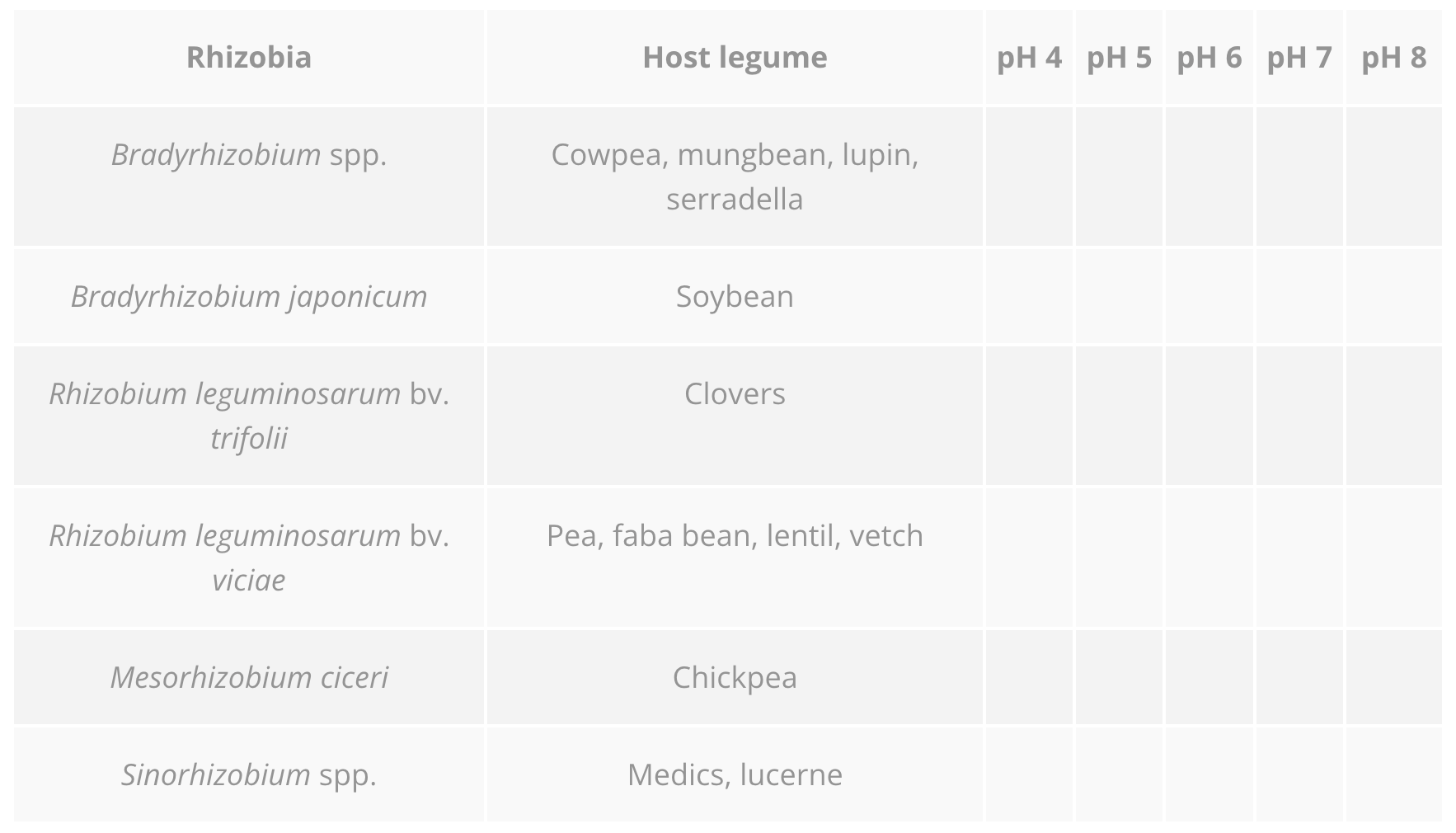
The use of a legume crop in a rotation has numerous benefits including providing a disease break, control of weeds, increasing soil nitrogen and many others. When growing legumes it becomes essential that the soil pH matches that of not only the legume, but also its compatible rhizobia. Table 2 provides information on some common legumes, their partnering rhizobia and their optimal soil pH. Serradella, narrow leaf lupin and their rhizobia are highly tolerant of low soil pH: however, they can have issues nodulating at high pH. In comparison, medics, lucerne and their rhizobia are highly sensitive to acidity and nodulation suffers below pH 5.
Work by De Meyer et al. (unpublished) in the central west found that ¾ of paddocks had pHca <5.5 and 95% of these paddocks had a pHCa <7 (n 60). When relating this information to Table 2, it means that almost all of these paddocks are unsuitable to grow lucerne and medics and 75% of these paddocks are unsuitable to grow peas, faba beans, vetch and lentil. Trying to grow legumes out of their preferred pH range prevents optimum nodulation which risks a decline in yield and increases the chance of the crop actually mining nitrogen from the soil, rather than storing it.
Table 2: Sensitivity of key rhizobia to pH, where red is sensitive and green is optimal (GRDC Inoculating Legumes)
Liming and the importance of incorporation for optimum nodulation in legumes
Lime applied to the soil to increase the pH to suit the target legume crop must be thoroughly incorporated to at least 10cm to prevent pH stratification. Issues in growth and nodulation of faba beans in NSW and Victoria were found due to lime not being incorporated properly (Burns 2016). This caused a stratification of soil pH resulting in soil 5cm and below being too acidic for good root growth. Incorporation of lime in the top 10cm is important due to rhizobial activity being the highest in this soil fraction and this is where the oldest and most valuable nodules form. These nodules are referred to as crown nodules and they are active for the longest period of time allowing them to fix the most amount of nitrogen. The division of soil samples for pH testing could be challenged to shifting towards testing 0-5cm and 5-10cm, allowing for a better understanding of the stratification of soil pH.
The application of lime can change the availability of nutrients within the soil. Figure 1 shows the impact that soil pH can have on the availability of nutrients to the plant. As the soil becomes more acidic the availability of most nutrients decline, with the exception of iron. This chart helps explain why the optimum soil pH for agricultural production is between 5.5 and 6.5, as that is where the least amount of nutrient tie-up occurs. Nutrient tie-up is very important when considering molybdenum (Mo) and its requirements in successful nodule function and nitrogen fixation in legumes. When Mo is below legume requirements in acidic soils due to tie-up, adding fertilisers with trace Mo could be considered as a short-term solution. However, care must be taken when applying additional Mo as too much can cause toxicity when the soil pH is corrected. Correction of soil pH should be undertaken before additional fertilisers are applied.
Is liming worthwhile in Central West districts?
A fundamental mind shift is required in low rainfall districts so that the application of lime is considered as an integral part of maintaining the system’s financial and environmental capital base, rather than being considered a stand-alone crop input.
If a yield response to liming is observed, the reality is that production has historically been lost to soil acidity. Where there is no response but liming was undertaken on the basis of pH and soil testing to determine rates, the liming was not wasted but is acting to maintain a good soil pH profile and will prevent yield decline in the future. The management of pH and the application of lime should be considered similar to changing the oil in the tractor motor: according to the manufacturers specifications to maintain reliability and asset value as opposed to purchasing a crop input, like nitrogen fertiliser, to improve yields or protein and receive a dollar return for the investment in a cropping cycle.
If one of the drivers behind choosing to grow a legume is to increase soil nitrogen then soil pH should be tested. If the soil pH does not support the legumes rhizobia, lime should be applied and incorporated to ensure the rhizobia are given the best chance to fix nitrogen. It should be kept in mind that if the legume is not fixing nitrogen then it is using it from the soil.
References
Heenan DP, McGhie WJ, Conyers MK (1998) Soil pH change over time in relation to rotation, N fertiliser, stubble management and tillage.
Scott BJ, Ridley AM, Conyers MK (2000) Management of soil acidity in long-term pastures of south-eastern Australia: a review. Australian Journal of Experimental Agriculture 40, 1173-1198.
Burns H (2016) Soil acidity holds back pulse potential. GRDC Ground Cover Issue 120: Jan-Feb 2016
Acknowledgements
The research undertaken as part of this project is made possible by the significant contributions of growers through both trial cooperation and the support of the GRDC. The author would like to thank them for their continued support.
I would also like to acknowledge the support of Nick Hill, former CWFS project manager and the help provided by Belinda Hackney, NSW LLS.
Further Information
This paper is a continuation of the paper John Small presented at the GRDC Update in February 2016 at Nyngan. For more information on lime decisions, support tools and management options, please see his paper here:
Contact details
Helen McMillan
Central West Farming Systems
PO Box 171, Condobolin 2877
Ph: 0437 612 140
Email: helen.mcmillan@dpi.nsw.gov.au