The Soil CRC’s free Soil Carbon Capacity Building webinar series helps NSW farmers, landholders, and advisors understand and manage soil carbon on-farm.
Across seven webinars — six already delivered and available to view — the series covers soil data access, interpretation, and region-specific practices for improving soil carbon.
This project supports growers to adopt strategic dry and early sowing practices that better suit their local conditions, helping them manage increasingly unreliable season-opening rainfall across southern Australia.
By working with 15 farming systems groups, including CWFS, the program aims to accelerate knowledge, confidence, and adoption of improved seeding strategies that reduce risk and enhance resilience.
This project is expanding Australia’s national soil data federation to allow researchers, farming groups and producers to access, share and visualise detailed soil and agricultural data through an online portal that supports better on-farm decisions and future research.
This project is developing and testing new organic and inorganic carriers for rhizobial inoculants to improve rhizobia survival, nitrogen fixation and crop performance, addressing the limitations of peat-based carriers and heat- and moisture-related losses.
By evaluating biochars, biopolymers and other low-cost materials across diverse regions and soils, the research aims to deliver practical, cost-effective alternatives that boost legume productivity and soil health in Australian farming systems.
This project is measuring how different soil management and amelioration strategies influence soil water infiltration, storage and crop use, while also assessing water competition in mixed-species cover crops.
This project is assessing how a unified network of 80 on-farm weather stations across NSW and Victoria can provide more localised, reliable climate data to improve bushfire and flood preparedness for farmers, emergency services and communities.
This project helps farmers build drought resilience by teaching and demonstrating how Stock Management Areas can protect groundcover, reduce land degradation and support faster recovery after drought.
This project is testing deep-rooted tropical legumes and pasture mixes to identify establishment challenges and improve adoption of legumes in northern grazing systems, boosting long-term drought resilience for producers across Queensland, NSW and the Northern Territory.
This project is building farmers’ skills and confidence to adopt drought-resilient pasture systems by demonstrating modern perennial grass and legume combinations that improve feedbase reliability, soil health, biodiversity and landscape resilience.
This project is creating a reporting tool that helps farmers better assess the full risk–reward profile of new farming practices by incorporating financial, environmental, social and governance factors rather than relying solely on traditional gross-margin analysis.
This project is demonstrating three proven strategies—diverse legume rotations, early sowing of slower-maturing crops, and better nitrogen management—to improve soil health, water holding capacity and profitability, helping farmers build stronger drought resilience across varied farming systems in NSW and northern Victoria.
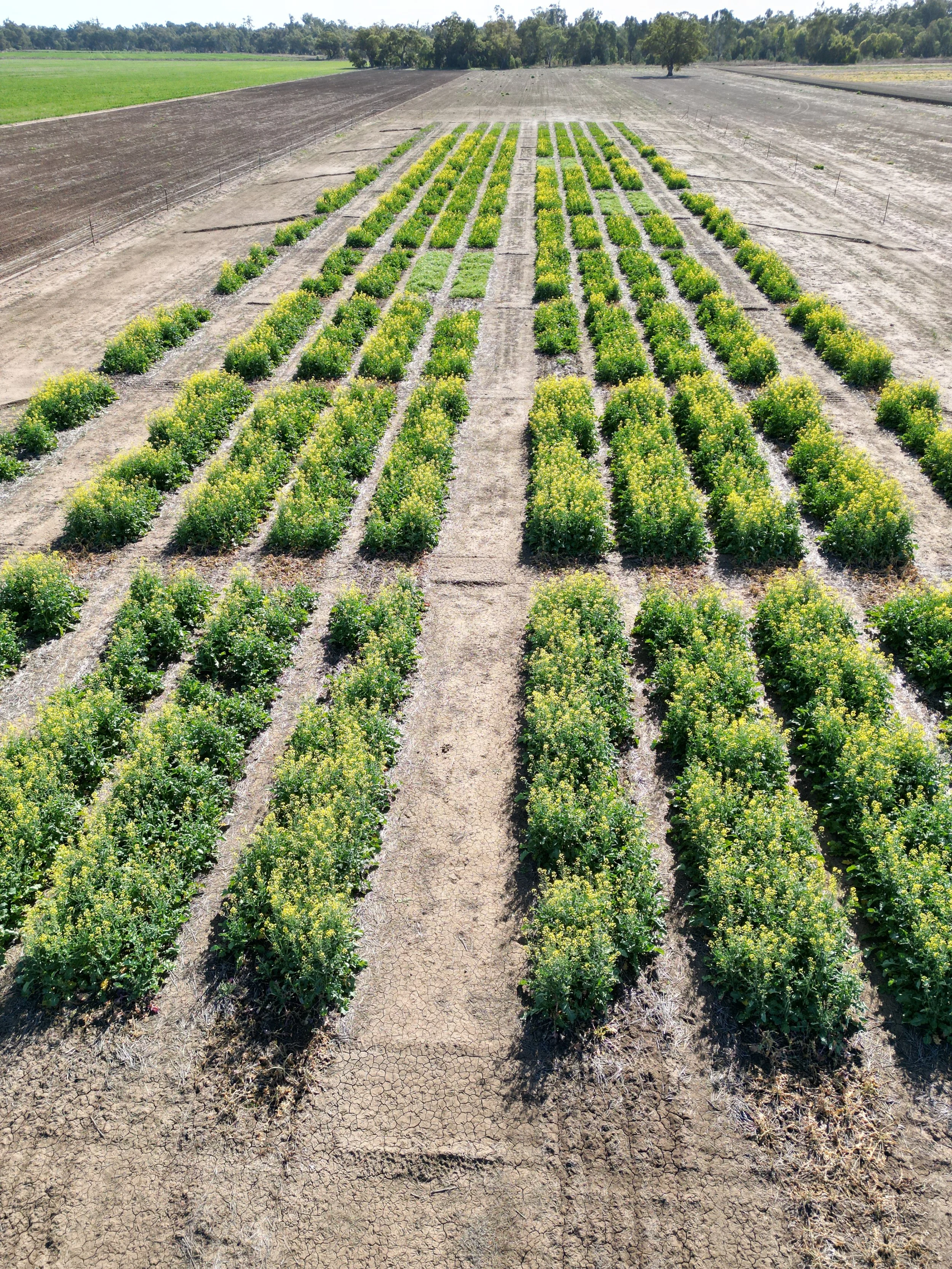
This project is demonstrating alternative annual forage legumes to help Central West NSW producers rebuild livestock numbers, diversify feedbase options and improve resilience to climate variability by integrating new legume species into mixed farming systems where traditional legumes are no longer reliable.
This project is comparing organic nitrogen from legume-based rotations with synthetic urea to assess their effects on soil health, grain yield and profitability, giving growers evidence to guide nitrogen management decisions in the Central West.
This project is investigating how increasing plant diversity through rotations, cover crops and perennial legumes can reshape rhizosphere processes to improve soil function, moisture dynamics, crop performance and farm profitability across different farming systems.
This project tests different nitrogen-banking targets and crop nitrogen-demand scenarios on-farm to identify the most profitable, lowest-risk strategies for closing the wheat yield gap caused by inadequate nitrogen supply.
This project is developing and testing locally tailored knowledge-sharing strategies to boost landholder engagement in soil-health practices, helping grower groups use more effective extension methods—from digital tools to field days—to drive adoption of best-practice soil management.
This project is developing modern lime-management and soil-carbon tools—supported by new machine-learning acidification models—to help farmers in southern and central NSW prevent subsurface acidity and soil carbon decline, improving long-term productivity and resilience across cropping and pasture systems.
This project develops and tests an Integrated Weed Management strategy to help low-rainfall zone growers control increasingly persistent and herbicide-resistant barley grass through large-scale, practical demonstration trials.
This project develops an Integrated Weed Management strategy for glyphosate-resistant Feathertop Rhodes grass by benchmarking its spread in southern NSW and studying its local biology to design effective, region-specific control approaches.
This project improved irrigator capability and profitability by demonstrating precision and autonomous irrigation technologies, best-practice management, and soil-moisture–driven decision-making to maximise crop returns per megalitre of water.
The Cool Soil Initiative partners with growers and farming systems groups to trial and validate practices that reduce on-farm greenhouse gas emissions, providing financial support, data tools and peer learning to improve sustainability, productivity and long-term resilience in the Australian grains industry.
This project empowered women and under-employed people in Central West NSW to gain the confidence, skills and digital capability needed for remote work through training, mentoring and peer support, helping rebuild workforce participation and resilience during drought and COVID-19.
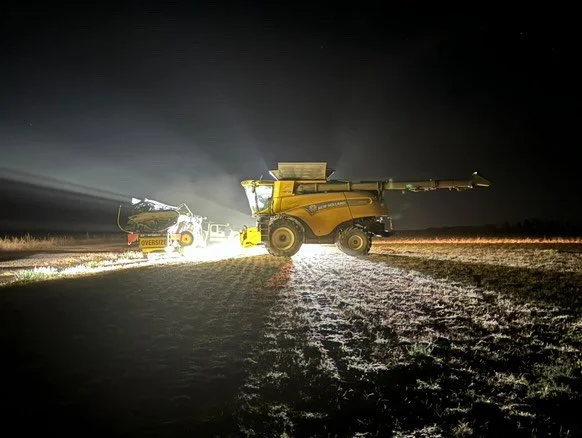
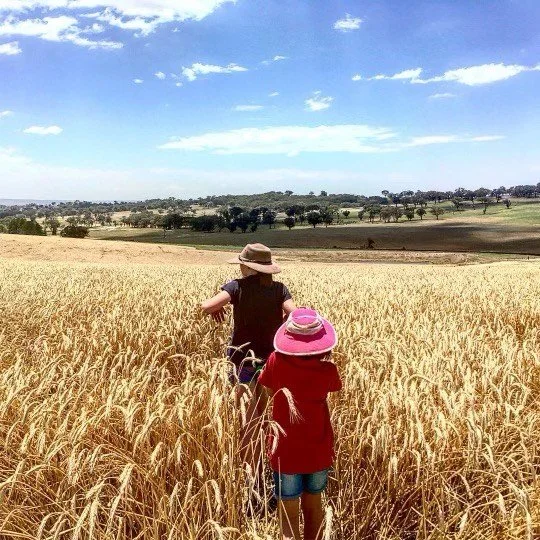
This GRDC project is evaluating long-season wheat varieties sown early on stored soil moisture to help growers adapt to shifting rainfall patterns, showing that with the right phenology and conditions, early-sown winter wheats can boost yield potential and better fit modern sowing programs in central and southern NSW.
This project investigates the social and institutional factors that influence farmers’ adoption of soil-improving practices, developing criteria and insights to help future programs and research achieve greater uptake and real on-farm change.
This project is building an interoperable, farmer-focused soil data platform that makes Australasian soil information easy to access, visualise and use, helping improve decision-making, drive new research and ensure agricultural data is securely governed and shared across industry.
This project is investigating how composts, manures and biosolids can unlock bound soil nutrients and improve nutrient-use efficiency, developing innovative application methods that boost soil fertility and sustainability across different farming systems.
This project is developing low-cost, energy-efficient technologies to recover nitrogen and phosphorus from organic waste streams and turn them into effective fertilisers, reducing reliance on mined nutrients and improving productivity across diverse farming systems.
This project is building the technical soil-health expertise of grower groups, Landcare groups and NRM organisations across Australia by creating communities of practice that strengthen their capacity to deliver high-quality, region-relevant soil management support to farmers.
This project is developing and testing novel soil-reengineering approaches that can address multiple interacting soil constraints at once, helping farmers lift productivity, improve resilience and make better-informed decisions about managing their most limiting soils.
This project raises awareness of accelerating soil acidity in Central West NSW and demonstrates that applying adequate lime is essential to halt acidification, protect productivity, and sustain long-term grain farming viability.